


## Warmth A down jacket keeps you warm due to the air layer in the filling: with a good chamber design, it confidently withstands cold and wind. A fur coat is the warmest "cocoon": the fur creates its own air layer and reliably protects in dry frost. A sheepskin coat (leather with fur inside) is on par with a down jacket, especially in the wind; in extreme cold, it may fall short of the fur coat in terms of warmth. ## Weight and Comfort The down jacket is the lightest and most flexible: it doesn’t pull on the shoulders and doesn’t hinder movement in transport. The fur coat is noticeably heavier and bulkier — it requires space and careful handling. The sheepskin coat is a middle ground: it is lighter than a fur coat, holds its shape well, and is between the two in weight. ## Slush, Rain, Wet Snow Most down jackets have a water-repellent treatment; synthetic filling tolerates moisture well. Natural down without protection gets wet and loses heat — a dense outer fabric is important. The fur coat does not like moisture: if it gets wet, it should be dried naturally and taken for professional care. The sheepskin coat, with regular treatment, holds up well against wet snow, but prolonged rain is still undesirable. ## Care and Lifespan The down jacket can be washed according to the instructions and regains its volume after drying. The fur coat requires professional cleaning, free storage, and protection from moths — it lasts a very long time. The sheepskin coat needs dry cleaning and moisture protection; leather is durable and becomes more noble over time. ## Style and Versatility The down jacket has long transcended sportswear: long models work as coats, while cropped ones pair well with sweater dresses and straight pants. The fur coat can be both festive and casual: knee-length is for outings, while cropped is for the city. The sheepskin coat speaks of character and soft strength: a bit retro, slightly "country," but paired with smooth fabrics, it achieves calm urban elegance. ## How to Choose Based on Climate and Lifestyle If your winter involves puddles and wet snow, the down jacket with moisture protection is the easiest to live with; the sheepskin coat can also manage with regular treatment. In dry frost, the fur coat is the most stable; an alternative is a warm long down jacket made of dense fabric. If you walk a lot and take the subway, choose a light down jacket; if it’s often windy, the sheepskin coat effectively blocks the wind. For the office and meetings, a minimalist sheepskin coat or a short fur coat is convenient: they can be worn over a dress or suit without overwhelming the look indoors. ## How It Looks in Practice **Down Jacket** Morning, slippery sidewalks, coffee to go. A long graphite down jacket over a knitted dress, dense matte tights, and high boots create a neat "column" without excess weight. On another day, the same down jacket changes the mood: straight jeans, a smooth sweater, ankle boots — pure urban minimalism and comfortable steps.  **Fur Coat** In the evening, when the frost is noticeable, a simple set works: a knee-length fur coat in a calm shade, a knitted midi dress, matte tights, and high insulated boots with a tread. The heel should only be a stable 4–6 cm or a platform; leave the gloss at home. For weekdays — shorter and more practical: a cropped fur coat, straight jeans, and warm Chelsea boots. If the snow is wet — treat the fur with a protective spray in advance, dry it naturally, away from radiators. 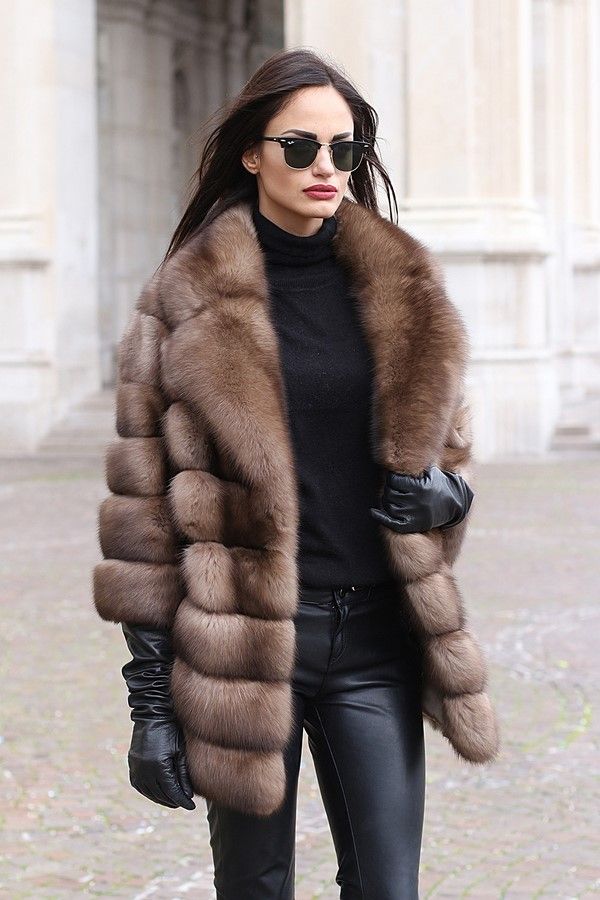 **Sheepskin Coat** Weekends with wet snow — time for leather with character. A classic cognac-colored sheepskin coat, straight jeans, and Chelsea boots — a warm, confident outfit for the whole day. Need femininity — a cropped sheepskin coat, a thin turtleneck, a midi skirt, and a stable heel: a light retro hint without a "suit."  ## What to Look for When Buying The fabric/leather of the outer layer should be dense, without a "plastic" shine; seams should be even, and zippers should move smoothly. For the down jacket — the quality of the filling and the stitching design; for the fur coat — the density and resilience of the fur; for the sheepskin coat — the softness of the leather and neat cuts. Try it on while moving: raise your arms, walk, sit — a good item should not pull on your back or "break" at the hem. ## Care to Make Them Last Longer Wash the down jacket according to the instructions, dry it thoroughly, restoring its volume. The fur coat should go for professional cleaning and be hung freely in a cover. Regularly treat the sheepskin coat with moisture protection and clean it at the dry cleaners; dry it naturally, away from heat sources. Prevention after the season is always cheaper than repairs. There is no universal answer — and that’s good news. Base your choice on the weather and habits: wet snow — a modern down jacket or a treated sheepskin coat; dry frost — a fur coat or a warm long down jacket. The rest is a matter of taste: choose a silhouette that is easy to live in, and let the outerwear work for you — keep you warm, not hinder you, and make your look cohesive.