

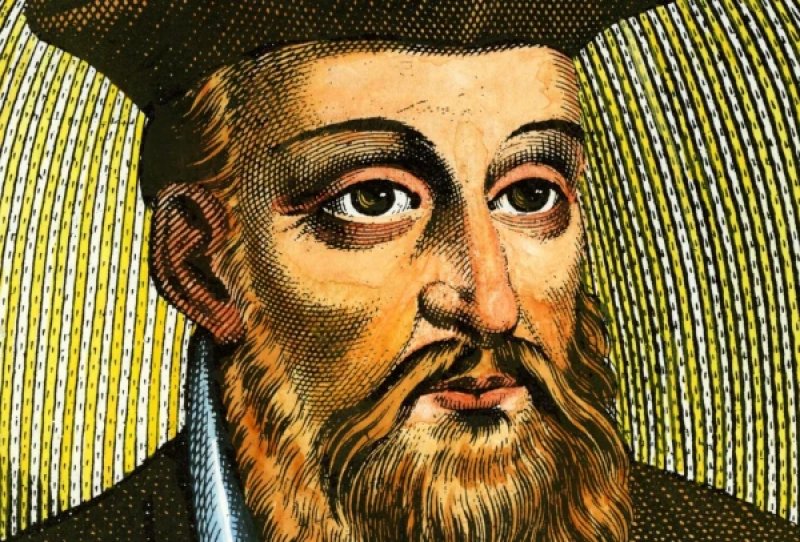
Nostradamus, whose predictions are encoded in the form of quatrains presented in his work "Prophecies" from 1555, left 942 such verses, in which, according to his followers, the outcomes of global events are contained. ## Seven Months – A Great War One of the quatrains states: *"Seven months of great war, people will perish from evil / Rouen, Evre, the king will not suffer defeat"*. This line is interpreted as a reference to the war between Russia and Ukraine. Previously, Nostradamus was also credited with predicting the atomic bombings of Hiroshima and Nagasaki with the words: *"In two cities there will be disasters such as never were"*. ## A Huge Swarm of Bees One of the most mysterious quatrains reads: *"A great swarm of bees will appear... a night ambush..."*. The number 26 associated with this quatrain is interpreted by some as a hint towards the year 2026. However, what the "bees" symbolize remains unclear. There is an opinion that bees are not insects but a metaphor for power or a symbol of respect, and possibly this image is connected to major political figures such as Donald Trump or Vladimir Putin. Their possible victories in 2026 could be interpreted as the fulfillment of this prophecy. ## The Death of a Celebrity by Lightning Strike According to the 26th quatrain of the first hundred, Nostradamus wrote: *"A great man will be struck in broad daylight by a lightning bolt"*. "Great man" could mean anyone from a royal family member or world leader to a well-known celebrity. It is possible that a high-profile incident will occur in 2026 — for example, lightning striking on the red carpet? ## Switzerland Will Be Drenched in Blood Another quatrain sounds alarming: *"Due to the favor shown by the city... Ticino will be drenched in blood..."*. This may refer to the Italian-speaking region of Switzerland and symbolize large-scale loss of life, an epidemic, or a natural disaster. ## Skepticism About Interpretations Skeptics point out that Nostradamus wrote in Middle French, often resorting to deliberately vague Latin expressions. Variations in manuscripts, spelling errors, and different interpretations of texts over the centuries make a precise understanding of his words difficult, notes *Mirror.co.uk*.