

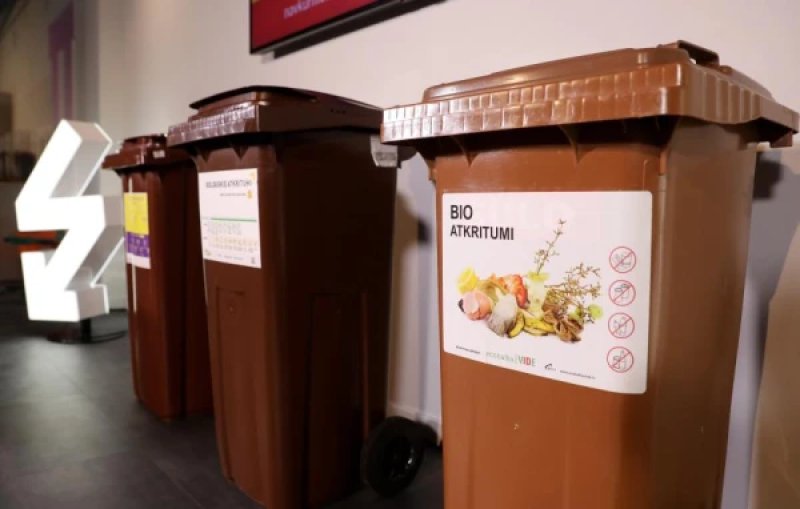
The representative of the initiative is Evija Karlovska. Although the Waste Management Law already provides requirements for the collection of bio-waste, this system is still not in place in many areas of Latvia, explains Karlovska. As a result, bio-waste ends up in containers for unsorted waste, increasing the burden on landfills and methane emissions. According to Karlovska, one of the main obstacles in bio-waste management is the lack of a unified system. Different municipalities apply various approaches, the boundaries of responsibility are unclear, and the infrastructure is insufficient. The initiative emphasizes that for real sorting to be possible, containers for bio-waste must be located close enough to households — approximately 50–100 meters away. The representative of the initiative calls on the Saeima to amend the Waste Management Law to create a unified system at the state level. The initiative proposes to clearly define the scope of responsibility, involved institutions, and the control procedures, as well as to ensure uniform conditions for implementation and oversight across all municipalities. Karlovska also urges the parliament to require municipalities to place containers for bio-waste at a reasonable distance from residential buildings, inform residents about sorting rules, and consider introducing financial incentives — for example, reducing the fee for bio-waste collection and increasing it for unsorted waste collection. In her opinion, a unified and effective system will help Latvia achieve EU goals in ecology and climate, avoid fines, reduce methane emissions, and improve the quality of the environment. Such a system will also allow for the use of bio-waste for the production of biogas and compost, as well as promote the involvement of residents and their responsibility for the state of the environment. Since the publication of the initiative on November 26, 2025, until the morning of January 5, 2026, 57 people have signed it.