

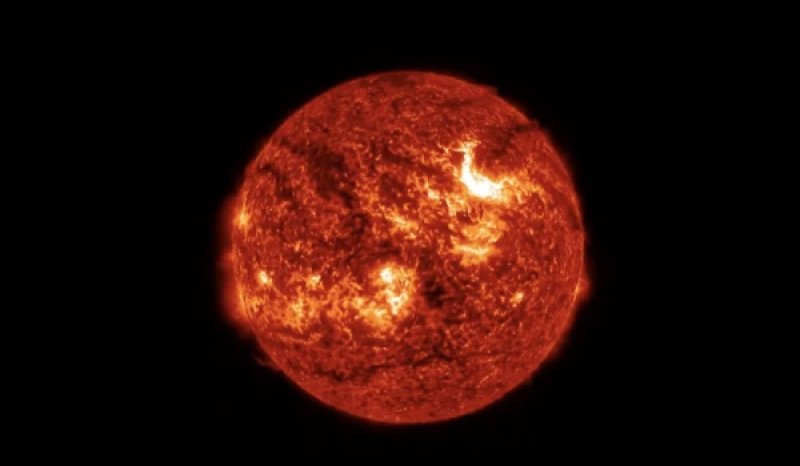
At the NOAA Space Weather Prediction Center, an X-ray flare emerged from region 4366 on the Sun. This flare was classified as an X8.1 level. It is noted that solar flares are energy releases measured in X-ray radiation, writes [Focus](https://focus.ua/technologies/742331-prognoz-magnitnyh-bur-s-2-po-5-fevralya-na-solnce-proizoshla-moshchnaya-rentgenovskaya-vspyshka). Solar flares of this magnitude can last from several minutes to several hours. According to experts, this flare will not cause communication problems and will not harm people. “Despite the impressive scale, this event still does not pose a significant threat to the population,” said NOAA in a statement. Currently, there are six active regions on the solar disk. The most notable region on the disk is a rapidly growing area, which accounts for most of the flares recorded in the last 24 hours. Importantly, there have been no coronal mass ejections (CMEs) directed towards Earth in the last 24 hours. This indicates that magnetic storms are not anticipated on Earth in the coming day. The speed of the solar wind has also decreased to background levels, fluctuating between 390 km/s and 300 km/s. ## Forecast of Magnetic Storms for Four Days In the coming days, scientists expect moderate intensity flares, with a possibility of strong flares. Although there are currently no coronal mass ejections towards Earth, the rapidly growing sunspot region is approaching the center of the star's disk. This means that if a mass ejection occurs in the coming days, it will head directly towards Earth. Geomagnetic activity is expected to be minimal over the next three days. By February 5, the situation may become less stable due to the approach of fast solar wind towards Earth.