

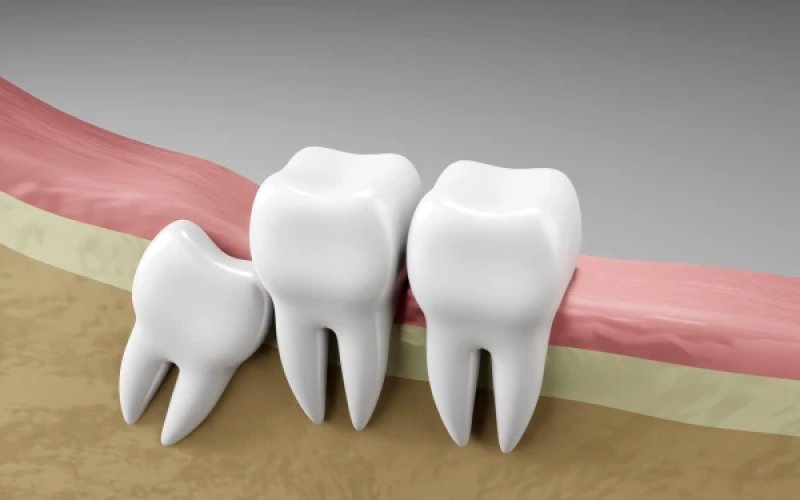
### What Are Wisdom Teeth and When Do They Erupt Wisdom teeth are **third molars** that typically emerge between the ages of **18 and 24**. They complete the formation of the dental arch and have long been considered a necessary part of human anatomy. However, practice and research show that having all four "eights" is not universal. ### Evolutionary Heritage From an evolutionary perspective, wisdom teeth are a "hello" from our ancestors. Ancient humans had larger jaws and consumed tough, unprocessed foods: raw meat, roots, and plants. Additional molars helped efficiently chew such food. Over time, diets became softer, and jaw sizes decreased. As a result, modern humans often **physically lack space** for all 32 teeth, which explains the frequent issues with eruption or the complete absence of wisdom teeth. ### Why Some People Don’t Have Them at All Congenital absence of wisdom teeth is called **agenesis**. This is not a pathology but a common phenomenon. According to various estimates, **10 to 41% of people** lack one or more third molars. Factors influencing this include: * **Genetics** — if parents did not have wisdom teeth, the likelihood of their absence in the child is higher * **Gender** — agenesis occurs slightly more often in women * **Ethnic background** — absence of "eights" is more common among some Asian and Native American populations * **Jaw and facial size** — compact facial structures are less likely to "accommodate" third molars * **Developmental conditions** — childhood nutrition, birth weight, and overall health status ### When Teeth Are Present but Not Erupted Even with the presence of tooth buds, wisdom teeth may never erupt. Approximately **80% of young adults** have at least one that remains **impacted** — hidden in the bone. Such teeth may: * grow at an incorrect angle * press against neighboring teeth * cause inflammation, pain, or infections * lead to misalignment of the dental arch Impacted teeth are the most common reason for dental visits. ### Is It Necessary to Remove Wisdom Teeth? In short — **no**. If a tooth has erupted properly, does not harm tissues, participates in chewing, and can be maintained properly, it can serve for many years. Removal is recommended if the tooth: * causes pain or swelling * provokes recurrent inflammation * contributes to crowding of teeth * increases the risk of cavities and gum disease * leads to the formation of cysts The decision is always made individually — based on examination and X-rays. ### Frequently Asked Questions **Is it rare to live without wisdom teeth?** No. Complete or partial absence is a common occurrence. **Is it dangerous for health?** No. The absence of third molars does not affect bite, chewing, or overall oral health. ### Conclusion Wisdom teeth are more of an **evolutionary remnant** than a necessity. Some people encounter them too closely, while others never do. Both scenarios are normal. Modern dentistry operates on a simple principle: if a tooth does not cause problems — it is preserved; if it poses a risk — it is removed. And if it is absent from the start, it can even be a small bonus from nature.