

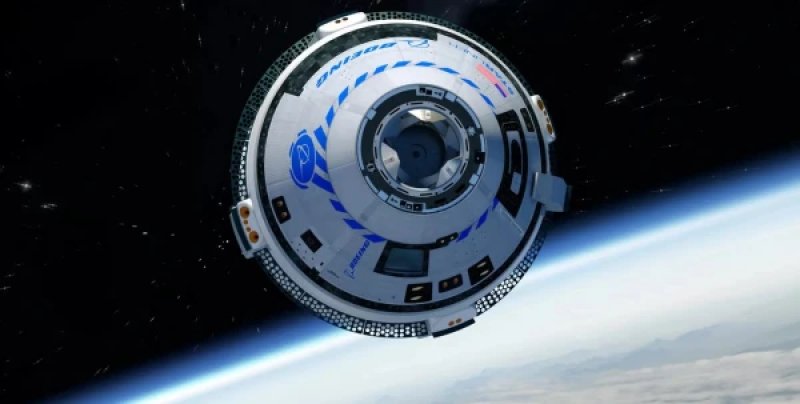
At a press conference held on February 19, NASA representatives reported the results of the investigation into the emergency situation that occurred with the Starliner spacecraft in the summer of 2024. NASA stated that this incident is classified as a Type A accident. This is the same category of emergencies assigned to the disasters of the Challenger and Columbia shuttles, writes Focus, citing Space. The Boeing Starliner spacecraft with NASA astronauts Sunita Williams and Barry Wilmore launched on its first crewed flight to the International Space Station (ISS) on June 5, 2024. The astronauts were supposed to spend 10 days on the ISS. During the flight, Starliner experienced numerous engine problems and was temporarily unable to maintain the desired orientation and trajectory. NASA Administrator Jared Isaacman reported that control of the spacecraft was restored, and the docking of Starliner with the ISS was successful. "But if different decisions had been made, if the engines had not been restored or the docking had been unsuccessful, the outcome of this mission could have been very different," Isaacman stated. Due to the inability to fully resolve the issues with Starliner in orbit, NASA decided to return it to Earth without a crew, which occurred in September 2024, as Focus had previously reported. According to Isaacman, although the spacecraft landed successfully, an unexpected engine failure occurred during the flight, which had not been reported earlier. Meanwhile, Williams and Wilmore remained aboard the ISS. They returned to Earth only in March 2025 on a SpaceX Crew Dragon spacecraft, having spent nearly 9 months in space, as Focus had previously reported. NASA has 4 categories of emergencies: from the most serious to the least serious, designated A, B, C, and D. The boundaries between them are clearly defined. For example, any incident that results in damage of at least $2 million or other unplanned mission expenses, or is associated with an unexpected deviation from controlled flight, is classified as a Type A accident. According to Isaacman, the situation with the Starliner spacecraft is indeed a Type A accident. However, during the flight and after the return of the Boeing spacecraft to Earth, NASA officials did not assign the most dangerous category to this accident. This was likely related to their desire to obtain permission to use Starliner for transporting astronauts to the ISS. "Concerns about the reputation of the Starliner program influenced this decision," Isaacman stated. It is worth noting that astronauts are currently flying to the ISS on SpaceX Crew Dragon spacecraft and Russian Soyuz spacecraft. It has been revealed that the investigation into the emergency situation is still ongoing. NASA and Boeing are still working to determine the root cause of the problems with the Starliner spacecraft's engines, which will not be transporting astronauts to the ISS until these issues are resolved, Isaacman reported.