

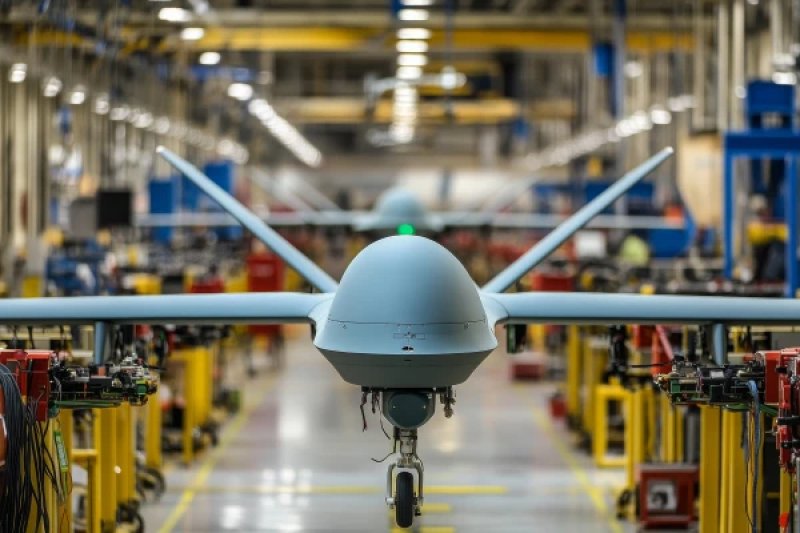
The General Directorate of Armaments (DGA) has been ordering drones for the French army for 10 years. Previously, it was about hundreds of devices annually. No French manufacturer produced more than 200–300 drones per year. Today, against the backdrop of war in Europe, the defense industry is tasked with making the production of small drones (weighing less than 150 kg) mass-scale. To this end, in June 2024, the Ministry of Armed Forces initiated the "Pact for Air Defense Drones." To date, more than 170 large companies, startups, and research centers have joined it. One of the tasks set before them is to supply a thousand inexpensive training copters for the large-scale military exercises "Orion 26," which are taking place in France since February of this year. These exercises presented an excellent opportunity to test the drones. One of the key issues was the price, said military engineer and coordinator of the "Pact for Defense Drones" Arnaud Mori at a press conference. If one drone costs, say, 10,000–20,000 euros, then a thousand drones would cost 10–20 million. Moreover, drones are usually destroyed during military exercises. "Our new norm" The DGA set an ambitious goal: to produce a thousand copters costing less than a thousand euros each within less than a year, in time for the "Orion" exercises. In February 2025, the International French Radio reported that the General Directorate of Armaments announced a European tender, setting another condition: the electronic tracking maps for the drones must be made in Europe. Companies sent about 30 proposals to the DGA. The tender was won by the French startup Harmattan AI, founded in 2024: its training drone project SONORA was deemed the most successful from both a technical and financial standpoint. It allows soldiers to conduct reconnaissance and surveillance.