

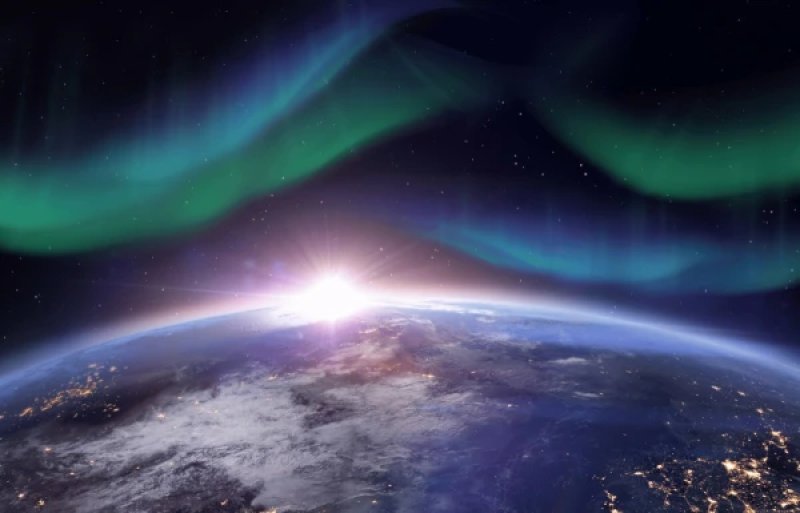
According to scientists from the Solar Astronomy Laboratory, an acceleration of solar wind streams is expected. Upon reaching Earth, they may enhance geomagnetic activity and provoke magnetic storms. ## 'Rift' on the Sun The source of possible disturbances is already being observed on the surface of the Sun. It concerns a large coronal hole — an area from which the solar wind is emitted particularly actively. 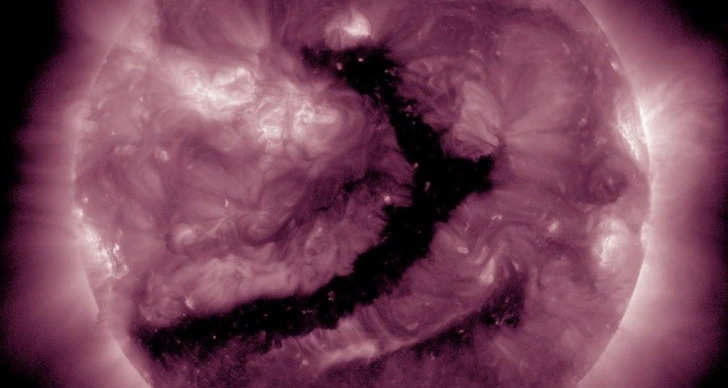 This time, the object has attracted researchers' attention due to its unusual shape. While such areas usually resemble round spots or outlines similar to 'butterfly wings', this structure looks like a gigantic rift stretching across the entire solar disk — from the southern to the northern pole. Astrophysicists note that a similar situation was observed in mid-February. At that time, the coronal hole had a shape reminiscent of a dragon and caused moderate magnetic storms — levels G1–G2 on a five-point scale. Since the size and structure of the March coronal hole are virtually indistinguishable from the February one, scientists allow for the possibility of a similar scenario repeating. ## When Magnetic Storms May Occur According to preliminary calculations, **the first signs of geomagnetic disturbances may appear as early as Friday, March 13, closer to midnight.** If the forecast is confirmed, there is a chance of bright auroras appearing. However, specialists emphasize that it is still too early to draw definitive conclusions. At the moment, no real acceleration of the solar wind has been recorded, so the onset of a magnetic storm must be confirmed by instrumental observations.