

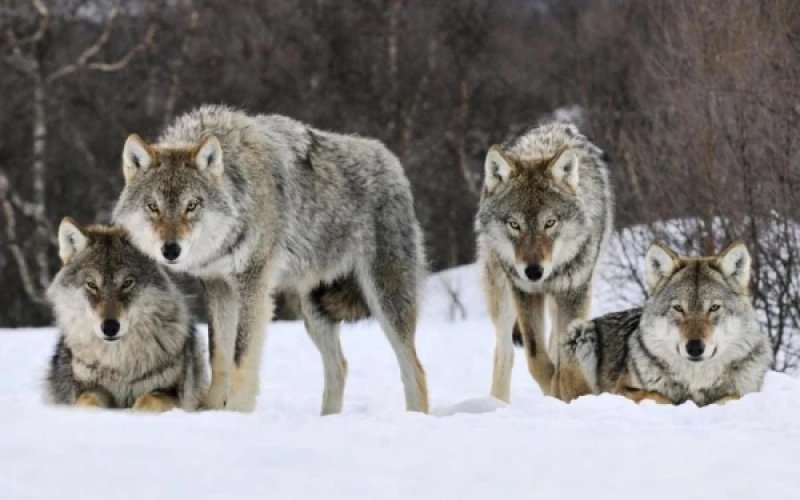
## Farmers' Losses and "Unplanned" Expenses Juris Berziņš, the owner of the Sili farm near Ligatne, notes that in autumn, pastures become a high-risk area. During the training period for young predators, they lose their caution and increasingly approach herds. Even modern fencing and surveillance systems do not guarantee safety: the farmer has to move the cattle closer to the house significantly earlier than usual, leading to unplanned feed expenses. In recent years, Juris's farm has repeatedly come under attack - due to wolves, the pastures have become unsafe in autumn. Predators become more active while training their young and increasingly approach herds. Despite fences and cameras, he has to move the cattle closer to the house earlier, which increases feed costs. There have been several attacks in recent years: a calf was killed, another went missing, and the frightened herd scatters, making it difficult to gather them. According to farmers' estimates, direct and indirect damage amounts to thousands of euros. The main demand of the industry is to reconsider the quota (which is currently set at 370 individuals for this season) and to extend the legal hunting period. ## Position of Authorities and Scientists The State Forest Service assesses the situation with restraint: the wolf population is stable, and the volume of damage in some regions has even decreased thanks to quality fencing. The agency acknowledges the need to update the rules but emphasizes that it is at the epicenter of a conflict between two radically opposed groups - hunters and eco-activists. Currently, officials have several scenarios on the table: - Complete cancellation of quotas while simultaneously shortening the hunting season. - A total ban on hunting with the issuance of one-time permits only in the case of confirmed attacks. The scientific community, in turn, reminds that there is no direct correlation between the number of wolves killed and the safety of livestock. Researchers recommend shifting the focus to preventive measures for protecting farms. So far, Latvia has not established a unified compensation system for losses caused by predators, and the methods for counting the population raise disputes. While the authorities maintain a wait-and-see position, the conflict between supporters and opponents of hunting remains at a standstill.