

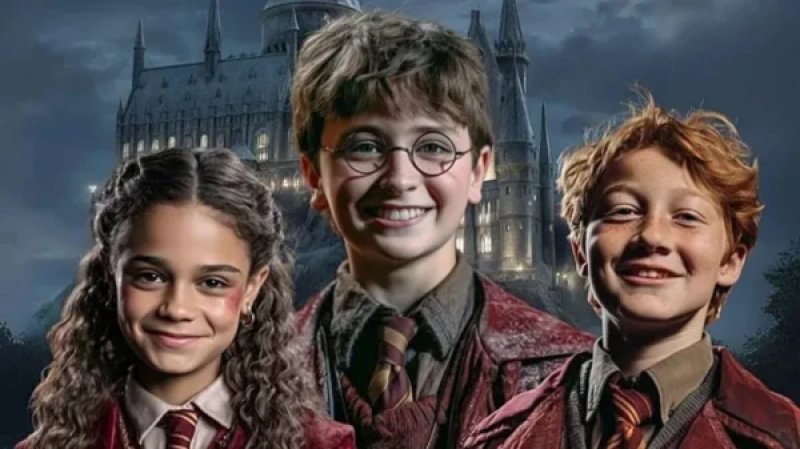
## Blue Hogwarts and the Ghost from the Book The first thing that stands out is the palette. Where the 2001 film breathed warmth and fairy-tale charm, the series exists in a cold, almost sterile blue. For some viewers, this immediately became a problem — it was this honeyed, cluttered atmosphere filled with magical trinkets from the first films that created the feeling of being part of something real. Proponents of the new approach argue otherwise: the series does not have to be a remake. The cooler style is an attempt to say something of its own, to distance itself from nostalgia and present the material with a fresh perspective. Some also note that on the HBO platform itself, the image looks warmer — and the blue tint may partly be an artifact of compression on YouTube. ## But even this is not the main reason for the debates. Meanwhile, the creators confirmed several details that true fans of the books truly appreciated: Peeves — the mischievous poltergeist who was cut from the first film — will appear in the series. They also promise to recreate the spirit of the 1990s more thoroughly — and this is not just cosmetic, but a fundamental difference in approach. ## Snape, Who Wasn't Expected The main sticking point became the casting. The role of Severus Snape went to British actor Paapa Essiedu — a dark-skinned man. And this is where the fandom split. The debate turned out to be multi-layered. Firstly, there is the question of visual accuracy: in the books, Rowling described Snape quite specifically — pale skin, a hooked nose, greasy black hair, yellow teeth. For some fans, changing these traits is not a trivial matter but a breach of the agreement between the text and the adaptation. Secondly, and this is more complex, there is a narrative argument. In his school years, Snape was severely bullied by James Potter and Sirius Black. This bullying is a personal enmity dictated by the characters' personalities, not anything else. Part of the fandom fears that a dark-skinned Snape and his white tormentors will automatically shift the focus from psychological drama to racial dynamics — even if the creators of the series did not plan this. There is also a third layer: Essiedu is an attractive-looking actor, whereas Snape's unattractiveness in the books was a narratively important detail of his character. Not a cruel characterization, but part of who he is. ## A Balance Yet to Be Found HBO found itself in the classic trap of adaptation: trying to please both those who want accuracy and those who expect something new almost always ends in dissatisfaction for both sides. The series has not yet been released — and it has already become a reason for discussions, petitions, and heated comments. Whether it will meet expectations — we will find out after the premiere. But one thing is already clear: the Harry Potter fandom has not changed. It remains passionate, picky, and absolutely relentless.