

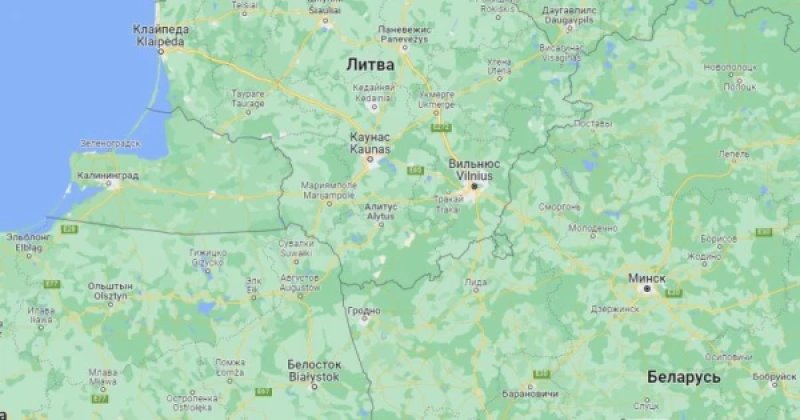
Lithuania and Poland will conduct military exercises "Gallant Boar" (also "Brave Boar", "Gallant Boar 2026") near the Suwalki Corridor, which runs along the borders of the countries, from June 16 to June 26, with France also participating. This was reported by the Lithuanian portal LRT on Saturday, June 13. From Lithuania, the exercises will involve the mechanized dragoon battalion of the Grand Duchy of Lithuania Butigeidis and the "Žemaitija" infantry brigade, the portal specifies. During the maneuvers, joint operations, synchronization of allied actions, and improvement of skills necessary for ensuring the protection of the Suwalki Corridor will be practiced. ## ## The Suwalki Corridor - a Particularly Vulnerable Area for NATO The narrow isthmus between the Kaliningrad region and Belarus, stretching less than 100 km, has significant strategic importance for NATO and the EU, as it connects the Baltic states with the territory of the European Union. The EU and NATO fear that in the event of a possible confrontation, Russia may attempt to seize the Suwalki Corridor - this would cut off Lithuania, Latvia, and Estonia from the rest of the North Atlantic alliance. Due to this, military exercises are systematically held near "Suwalki", and Poland and Lithuania are intensively guarding these territories. In April 2026, the Lithuanian parliament approved the construction of a military training ground near the isthmus. It is expected that the work will be completed by 2028, and up to 4,000 servicemen will be able to be stationed at the corresponding site. Earlier, Reuters reported that NATO also intends to create a new command structure that will allow for the rapid deployment of military forces to Estonia and Latvia in the event of military escalation from Russia. ## The EU Sees Signs of Russia Preparing to Attack NATO Countries Despite the lack of visible success in the war against Ukraine, Russia continues to prepare for an attack on the North Atlantic alliance - this opinion was expressed in early June in an interview with DW by the Inspector General of the Bundeswehr (equivalent to the position of Chief of Staff in the armed forces of other countries - Ed.) Carsten Breuer. "We see that the Russian armed forces are concentrated in positions that are all directed towards the West. We see an increase in armaments by the Russian army and an increase in personnel. If you put all this together, if you connect the various lines, analysts come to the conclusion - and I rely on this - that the climax may occur in 2029," the military noted. Thus, Danish radio DR, Norwegian broadcasting company NRK, Swedish channel SVT, and Estonian publication Delfi published satellite images confirming the expansion of military bases on Russia's western border or the construction of new ones. Finnish defense expert Marko Eklund noted in a conversation with the media that satellite images of expanding military bases along the borders with Europe show that after the war in Ukraine, Russia plans to station about 115,000 military personnel there. At the same time, the Supreme Commander of NATO's Joint Forces in Europe, U.S. Army General Alexus Grinkevich, is confident that Moscow is not seeking open confrontation with the alliance, as it will not succeed. The Kremlin understands that NATO "has a number of asymmetrical advantages that they simply cannot counter," the military stated.
