

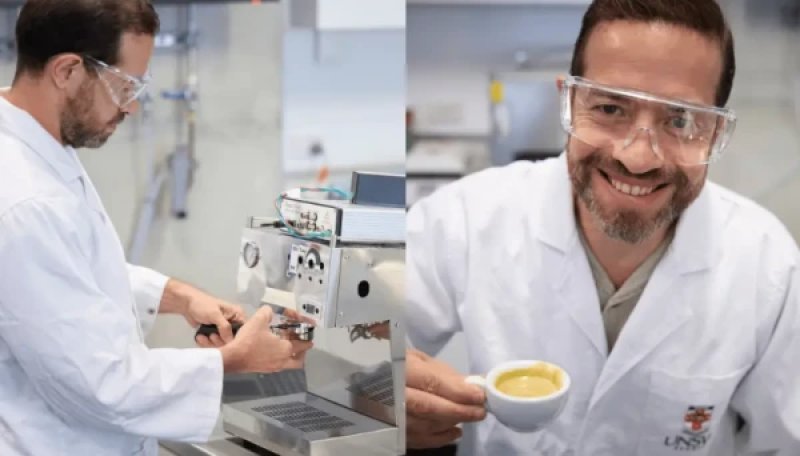
Scientists from the University of New South Wales prepared coffee in room temperature water, replacing heating with ultrasound. Sound waves extracted soluble substances from the beans in three minutes – almost like in a regular espresso. In a classic coffee machine, water is heated to about 90°C and passed under pressure through compressed coffee. The main part of the energy goes into heating and maintaining the temperature. In the new setup, engineers modified a regular coffee machine: they added a metal rod that transmitted vibrations at a frequency of 42.6 kHz to the portafilter with coffee. Under the influence of ultrasound, microbubbles formed in the water. They collapsed rapidly – this process is called cavitation – and destroyed the surface of the coffee particles, helping the water extract substances without heating. In three minutes at a power of 100 W, the setup extracted about 18% of the mass of finely ground coffee beans. The proportion of dissolved substances was 8.89%, while for hot espresso it was 8.74%. The acidity and caffeine concentration also matched. The main difference is the energy costs. For three servings, the classic machine consumed 0.082 kWh excluding the initial heating of the boiler, while the ultrasonic setup used 0.020 kWh. The savings amounted to about 75%. A tasting involved 100 people. They could not distinguish ultrasonic coffee from classic coffee by taste and aroma. But there is an important caveat: both drinks were cooled to 22°C, so the question of whether the technology will replace a hot cup of espresso remains open. Cold brewing coffee usually takes 12–24 hours and yields a less concentrated drink. The new work shows that ultrasound can significantly accelerate extraction without heating – primarily for the production of coffee concentrates.