

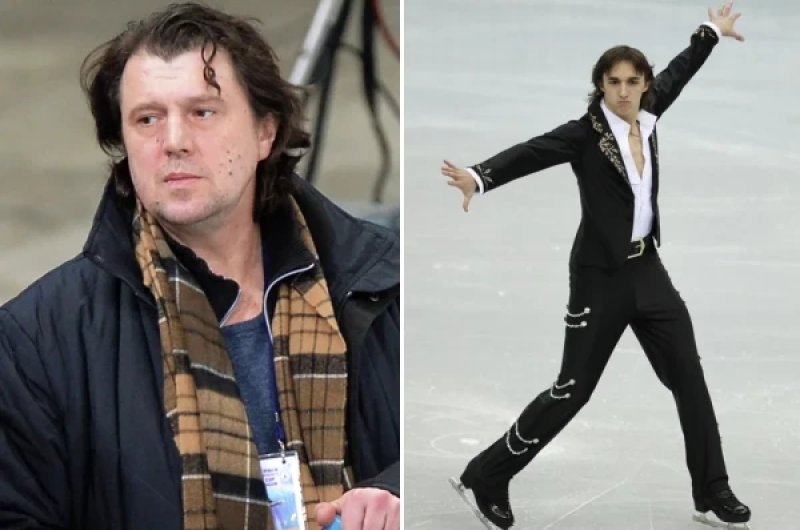
As reported by coach Tamara Moskvina, Dmitriev suffered a heart attack during a training camp in Oryol. He was taken to Moscow, where doctors did everything possible, but the figure skater passed away. Olympic champion Oksana Kazakova, Dmitriev's partner, told reporters: "He had an aortic dissection, he underwent surgery. The doctors did everything they could to save him. The operation was performed, but his body couldn’t cope, he stopped fighting. This happened at half past nine in the evening. He died in Moscow. His relatives would like to transfer him to St. Petersburg." **The Boy from Norilsk** Against the backdrop of Plushenko and Yagudin, Valieva, Zagitova, and Medvedeva, Arthur Dmitriev can be called an "unsung hero." Even during his own performances, more was written and said about the pair Gordeeva — Grinkov. Meanwhile, what he achieved has not been matched by any other men in pair skating. Pair figure skating in the USSR in the 1980s was the most successful discipline. The competition among pairs was incredible. Amidst this, a boy who grew up in Norilsk and started as a singles skater decided to try his hand at pair skating. Under the guidance of Tamara Moskvina, he began skating with Natalia Mishkutienok, and this duo immediately stood out for the special technical complexity of their elements. **Olympic Gold Amidst Collapse** In the post-Olympic season of 1988/89, Dmitriev and Mishkutienok won the World Universiade and became bronze medalists at the European Championships. But this did not guarantee the skaters a further "golden road." Ironically, they reached gold at the European and World Championships in 1991, when the USSR was collapsing. In 1992, the pair won the Olympics under the flag of the so-called "Unified Team" — that is, effectively without a flag and anthem. **The Duel in Lillehammer** After their success, Dmitriev and Mishkutienok turned professional, as was customary at that time. But by the 1994 Olympics, a series of returns of figure skating stars to amateur sports began. They returned to compete against other Olympic champions — Ekaterina Gordeeva and Sergey Grinkov. The judges awarded the palm of victory at the Games in Norway to Gordeeva and Grinkov, the media and public favorites. Their performance was indeed magnificent, but Mishkutienok and Dmitriev did not concede to them in any way, yet they received silver. Both of these pairs soon ceased to exist. However, while Natalia Mishkutienok simply decided to end her sports career, tragedy struck their competitors. In the fall of 1995, Sergey Grinkov died of a heart attack during a training session on the ice. He was 28 years old. **A New Challenge** Dmitriev was 27 when he began skating with a new partner — Oksana Kazakova. There was a successful reverse example: Irina Rodnina became an Olympic champion both with Alexei Ulanov and with Alexander Zaitsev. However, this had never worked out for men. Many shook their heads — why would an Olympic champion and world champion start all over again, knowing that every failure would be relished by detractors? Moreover, there were still plenty of competitors. In Russia, public sympathy was given to the pair Elena Berezhnaya / Anton Sikharulidze, who were compared to Gordeeva and Grinkov. **Winning Against All Odds** At the pre-Olympic European Championship in 1998, Berezhnaya and Sikharulidze outperformed Kazakova and Dmitriev, solidifying their status as favorites for the Games. But in Nagano, Arthur demonstrated the full strength of his champion character. Dispelling his partner's fears and doubts, he and Oksana showcased such a level of mastery that there was no doubt — Dmitriev and Kazakova won gold. After their victory, they continued to perform together in professional competitions and ice shows for several years, and in the early 2000s, Arthur Dmitriev transitioned to coaching. **Could Teach, but Didn’t Want to Force** In this profession, he did not shine as brightly as during his own performances. He successfully worked with juniors, helping Tamara Moskvina refine the skills of pairs aiming for gold at the World and European Championships. Experts say that Dmitriev could teach athletes to perform the most complex elements and establish technique, but only to those who aspired to it themselves. The two-time Olympic champion never belonged to the cohort of coaches who could squeeze the maximum, or even more, from their charges. Perhaps because he himself knew better than anyone what the price of success was. **A Departing Nature** Arthur Dmitriev did not enjoy the social life, did not raise his media profile through scandals, and did not engage in disputes in the press, as various "angels" and "demons" of figure skating have done and continue to do. He was a true Athlete with a capital A, who devoted himself entirely to his work, not trying to substitute it with the number of followers and "white noise." Eternal memory!