

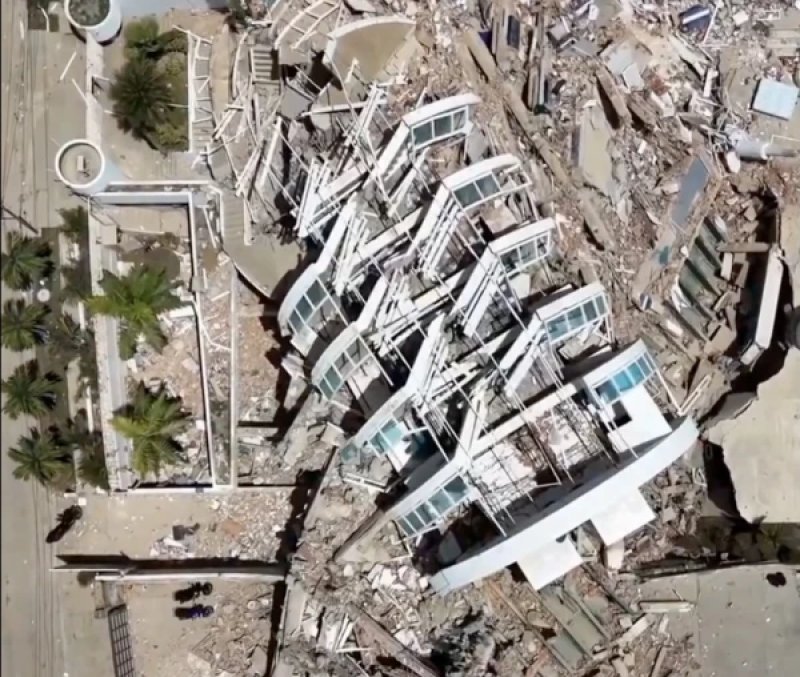
The scale of destruction following two powerful earthquakes in Venezuela turned out to be significantly greater than previously anticipated. According to a preliminary assessment published by NASA, around 58,870 buildings may have been damaged or completely destroyed in the affected areas. The calculations were carried out by Oregon State University researchers Cory Sher and Jaymon Van Den Hook based on satellite radar images taken the day after the earthquakes. High-resolution images from the European Space Agency's Sentinel-1 satellite were used for the analysis. The authors of the study emphasize that this is an express assessment. It is based on changes in the Earth's surface that may indicate serious damage to buildings. What is important to know: satellite analysis allows for a rapid assessment of the scale of the disaster; however, its results require on-site verification. Therefore, the published figures are not final. According to the latest official data, about 1,700 people have died as a result of the earthquakes, and thousands are still reported missing. At the same time, the chairman of the National Assembly of Venezuela, Jorge Rodriguez, reported damage to 855 buildings, of which 189 were completely destroyed. The difference between the official statistics and the satellite assessment is explained by different counting methodologies. While authorities report confirmed damages, satellite analysis records all possible changes that may indicate destruction. NASA notes that satellite data helps rescue services to quickly assess the most affected areas, plan search operations, and coordinate efforts on the ground. Two earthquakes with magnitudes of 7.2 and 7.5 occurred last week and became one of the most destructive natural disasters in the history of modern Venezuela. The search and rescue operation is ongoing. Recently, two powerful earthquakes struck Venezuela. NASA satellites captured imagery and data that are supporting response efforts. This NISAR map shows how the quakes shifted the land surface. Explore more: https://t.co/Z5QzddXuW5 pic.twitter.com/FtLsmHdAte— NASA Science (@NASAScience_) June 29, 2026