

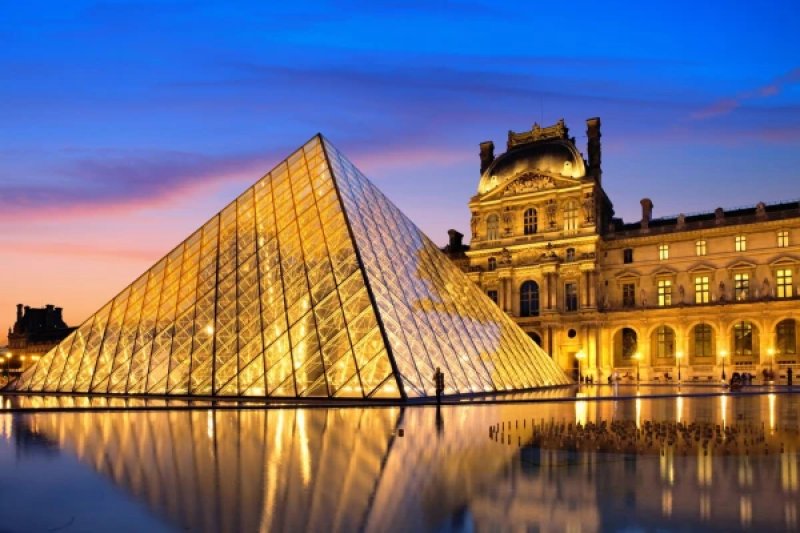
The Louvre, the most popular museum in the world, which is visited by about 9 million people annually, is experiencing a deep crisis. The news that circulated in all global media about the theft of jewels from Napoleon's collection in October 2025 and the multi-million fraud with tickets that came to light in February have dealt a severe blow to the museum's reputation. According to French President Emmanuel Macron, the task of the new director, Christophe Leribault, is to "restore peace and tranquility." Leribault took office just as Macron appointed his close ally Catherine Pégard as Minister of Culture. She replaced Rachida Dati, who resigned to participate in the March mayoral elections in Paris (which did not bring her success). The former head of Versailles was appointed to the Louvre after Laurence de Car suffered a fiasco in a long and desperate struggle to retain her position as director. A series of her management failures was documented in various departmental reports and parliamentary hearings that followed the museum's robbery in October 2025. In addition to assessing the state of affairs at the museum, the new director was also scrutinized by the French Court of Auditors, which stated that the Louvre "significantly lagged behind in modernizing its security system" because all efforts were focused on maintaining a "busy events policy" — a conclusion that de Car called "unfair." However, in reality, less than 0.3% of the museum's budget was allocated to security and fire safety. In strategic reports published before the robbery, the former Louvre director noted that thefts no longer posed a threat. "The robbery occurred precisely because of these oversights," stated Pierre Moscovici, president of the Court of Auditors. Parliamentary hearings concluded that when Laurence de Car arrived at the museum in 2021, she decided to abandon plans to enhance security initiated by her predecessor and prioritized a grand project to create a new entrance to the museum — a project that President Macron enthusiastically supported. Following the damning reports, other misfortunes and troubles ensued: floods, damage to load-bearing beams, exposure of ticket fraud, as well as a 40% increase in ticket prices for non-European tourists. De Car's management style is described by museum union representative Elisa Müller as "command-administrative, lordly, and rigid." According to the Court of Auditors, the director doubled the management salary fund and spent €500,000 on setting up a private dining room. Since mid-December 2025, museum staff have been conducting regular strikes — such mass protests had not been seen before. A former Louvre manager describes the museum's infrastructure as semi-ruined. "Maintenance and even urgent repairs have not been conducted for five years," he says. "Overall, the museum is at least eight years behind even in the most basic structural updates." Alexis Corbière, a rapporteur for the parliamentary commission, condemned the "hyper-presidency" with "a director making all decisions unilaterally." In the commission's damning verdict, his colleague Alexandre Poitier noted: "In any other country or institution, such a list of failures would have long led to the director's resignation." Laurence de Car herself did not attend the parliamentary hearings held after her resignation. Mr. Leribault - the country's hope Will Christophe Leribault cope with what he has inherited? He has an impressive track record and experience. Even in his youth, he became interested in art history, studied at the Sorbonne, the Louvre School, and the French Academy at the Villa Medici in Rome, and defended dissertations on the interiors of Parisian mansions from the 1770s to the 1830s and the French Rococo master Jean-François de Troy. Except for his work at the Getty Museum in Los Angeles and the Wallace Collection in London, Leribault's career has developed in Parisian museums. He dedicated sixteen years to the Carnavalet Museum, dedicated to the history of Paris, then worked for six years in the Louvre's graphic arts department while also curating a small National Museum of Eugène Delacroix located in the artist's workshop. In 2012, he was appointed director of the Museum of Fine Arts at the Petit Palais in Paris, where he organized original exhibitions of little-known or forgotten artists with striking scenography, which were a complete contrast to the pompous exhibitions at the Louvre. He promoted exhibitions and works by artists from the UK, Russia, Switzerland, and Scandinavian countries, organized the first exhibition in France about Oscar Wilde, and assembled an outstanding collection of Pre-Raphaelites. Attendance at the Petit Palais grew from 300,000 visitors in 2012 to 1.2 million in 2018. In 2021, Leribault was appointed head of the Musée d'Orsay, but just two years later, Emmanuel Macron urgently called on him to replace Pégard, who was left in Versailles for three years after mandatory retirement, which caused a scandal. Christophe Leribault's main task now is to clean up the Augean stables at the Louvre. Artist Éric Demazière, also a member of the Academy of Fine Arts, describes his colleague as a "humble, even somewhat elusive" person. According to one curator, who requested anonymity, Louvre staff welcomed the new appointment with joy. "The atmosphere changed in one day," he says. "Everyone breathed a sigh of relief. He knows this place and knows all the staff. There are wonderful memories of his six-year work here. He has never lost sight of the human component. And he has a drive for innovation that can lead us forward. Although everyone understands: the task ahead of him is monumental." A plethora of plans Macron continues to support the project launched in early 2025, called "New Renaissance," which involves creating a new entrance by the Seine, a major renovation of the museum complex with complete technical re-equipment and modernization of infrastructure, organizing underground spaces, and a hall for exhibiting Leonardo da Vinci's "Mona Lisa" with a separate entrance ticket. Its budget has already increased from €400 million to €666 million — €1 billion. The Court of Auditors calls the plan "financially unfeasible," and it is criticized in parliament. So far, sponsors willing to provide the missing €300 million have not been found. Technical studies, especially regarding the risk of underground flooding on the banks of the Seine, are still ongoing. Unions call the plan for constructing a new entrance to the Louvre "madness" and demand that it be abandoned. It seems that Christophe Leribault will need all his professional and diplomatic skills to simultaneously please the president and calm the angry staff and deputies. "This is the most important and necessary project for the Louvre. We cannot continue to receive 9 million visitors through the Pyramid," Leribault stated in an interview with Le Monde. "It is absolutely necessary to rethink the infrastructure. Avoiding these costs is impossible. We can try to adjust some aspects, consider the possibility of scaling down the planned works, and we will do that, but the overall savings will remain insignificant." Leribault also plans to attract an additional €330 million from patrons. Construction will not begin until at least 2028. A month ago, architects for the "New Renaissance" project were selected — the winners of the international competition were specialists from the New York firm Selldorf Architects, who worked on the Frick Collection renovation, and Parisian Studios Architecture, which collaborated with Gehry Partners on the Louis Vuitton Foundation and LUMA Foundation buildings. They proposed the concept of a "Great Colonnade," which will provide clearer connections between the city and the museum. Thus, the moat preserved since the Middle Ages around the Louvre will become a green zone, accessible via two ramps, under which new cafes, bookstores, and souvenir shops will appear. There will also be a viewing platform facing the eastern facade and an entrance in front of the colonnade. Two new entrances to the museum, located on either side of the moat (one from the Seine and one from Rue de Rivoli), under two gardens, will provide access to new exhibition halls and to the route associated with the "Mona Lisa." Now the competition winners will have further work on the project with Louvre staff and authorities, and subsequently with the public. In anticipation of the renaissance Leribault diplomatically states: "I am not here to overturn the work of my predecessors." However, among other announced changes is the fact that projects related to contemporary art "will undoubtedly become rarer in the coming years." He adds: "We need to be able to prioritize; repair work is our top priority. The Louvre is entering a period of transformation that will require energy, time, and focus from our teams. In the coming years, the presence of contemporary art will undoubtedly become more sporadic." An important change will affect the policy of replenishing the Louvre's collection. According to the recommendation of the Court of Auditors, the share of revenue from ticket sales allocated for this purpose should decrease from 20% to 12%. Another change will concern the exhibition of historical jewels. The Apollo Gallery, where the theft occurred, will reopen in July. But without display cases for the jewelry, as was originally intended in the 17th century when it was created. This will allow the frescoes to speak for themselves, turning the space into a version of the Hall of Mirrors at Versailles. Valuable items that were previously displayed there will now be exhibited in the Richelieu wing. However, this will not apply to the jewels — they will be kept in a secure location until the museum prepares a new hall for their display. Additionally, the museum's collection of ancient Greek vases will move from the Campana Gallery due to its restoration, and the escalators in the Richelieu wing are undergoing repairs. Another crisis faced by the museum has been deep dissatisfaction with deteriorating working conditions among Louvre staff, which has led to several strikes. Leribault stated in an interview that he views improving conditions for visitors as a means of improving conditions for workers. He noted that, in addition to reviewing workload plans, renovations of staff break rooms are currently underway.