

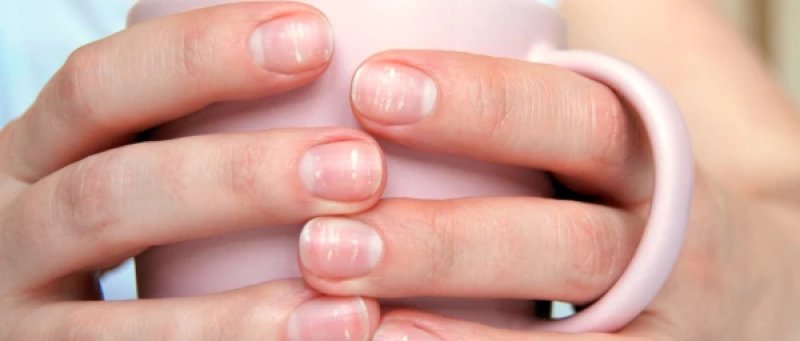
Many people have surely noticed small white dots or stripes on their nails at least once. Some immediately start taking calcium, while others recall the advice to "eat more cottage cheese." However, modern medicine asserts that the connection between white spots on nails and calcium deficiency is virtually non-existent. Experts explain that such changes most often have a completely different origin. ## Why Do White Spots Appear In medicine, this condition is called **leukonychia**. Despite the complex name, it usually refers to a minor disruption in the formation of the nail plate. During nail growth, the process of keratin formation — the protein that makes up the nail — changes in a specific area. As a result, instead of transparent tissue, a white spot or stripe appears. Leukonychia can manifest in various ways: * small white dots; * transverse or longitudinal stripes; * partial whitening of the nail; * complete color change of the nail plate (this occurs much less frequently). ## Is Calcium Really to Blame? Experts answer unequivocally: **no**. Although calcium is vital for the health of bones, teeth, muscles, and the nervous system, it has virtually no effect on the color of the nail plate. The nail is primarily made up of keratin — a strong protein. Its formation is more influenced by an adequate amount of protein in the diet, as well as trace elements such as zinc, sulfur, and silicon. A true calcium deficiency usually manifests differently. It is characterized by muscle cramps, numbness in the fingers, increased fragility of bones, and muscle dysfunction. Nails can indeed become more brittle, but white spots are not typical signs of calcium deficiency. ## The Most Common Cause — Microtraumas According to specialists, most white spots appear after minor injuries to the nail growth area. It is enough to accidentally hit a finger, have an unsuccessful manicure, or slightly pinch a nail. Often, a person does not even remember such an episode, and the white spot becomes noticeable only after a few weeks when the nail starts to grow out. ## When Nutrient Deficiency May Be the Cause Unlike calcium, a deficiency of **zinc** can indeed disrupt keratin formation. In this case, white dots or stripes may appear on several nails at once. With a deficiency of **iron**, changes in the nails are usually accompanied by other symptoms: * constant fatigue; * pale skin; * brittle hair; * general weakness. Sometimes changes in the nails can also be related to insufficient protein intake. Since the nail plate is almost entirely made of keratin, a deficiency of protein food can cause nails to become thin, start to split, and sometimes develop white stripes. ## What Other Causes Are Possible In some cases, leukonychia may accompany other diseases. White changes in the nails sometimes occur with a fungal infection, but then other signs usually appear — yellowing of the nail, thickening, and crumbling. Similar changes can also be observed in nail psoriasis, during the intake of certain medications (for example, some chemotherapy agents), and, much less frequently, with chronic exposure to heavy metals. At the same time, sometimes white spots appear in completely healthy individuals without any serious disorders. ## When to See a Doctor In most cases, small white dots gradually disappear on their own as the nail grows out and do not require treatment. However, a specialist's consultation is necessary if: * the spots do not shift as the nail grows or become larger; * white changes appeared suddenly on all nails; * the shape or thickness of the nails changed simultaneously; * there is pain, yellowing, splitting, or thickening of the nail plate; * changes are accompanied by pronounced weakness, weight loss, or other symptoms. In children, single white dots also most often occur after minor injuries. But if they become numerous and are accompanied by poor appetite, pale skin, or growth retardation, a doctor may recommend further examinations. ## Is Testing Necessary? If a white spot appeared after an obvious injury and gradually shifts toward the edge of the nail, no tests are usually required. However, if such changes become numerous or are accompanied by other symptoms, a doctor may recommend checking levels of iron, ferritin, zinc, B vitamins, and, if necessary, calcium and vitamin D metabolism indicators. At the same time, white spots themselves are not considered a sign of calcium deficiency. White dots on nails in most cases are not dangerous and most often appear after unnoticed microtraumas. Much less frequently, the causes are deficiencies of zinc, iron, or protein, fungal diseases, or other disorders. Therefore, it is not advisable to start taking calcium supplements on your own — it is much more important to assess overall health and consult a doctor if changes become numerous, persist for a long time, or are accompanied by other alarming symptoms.