

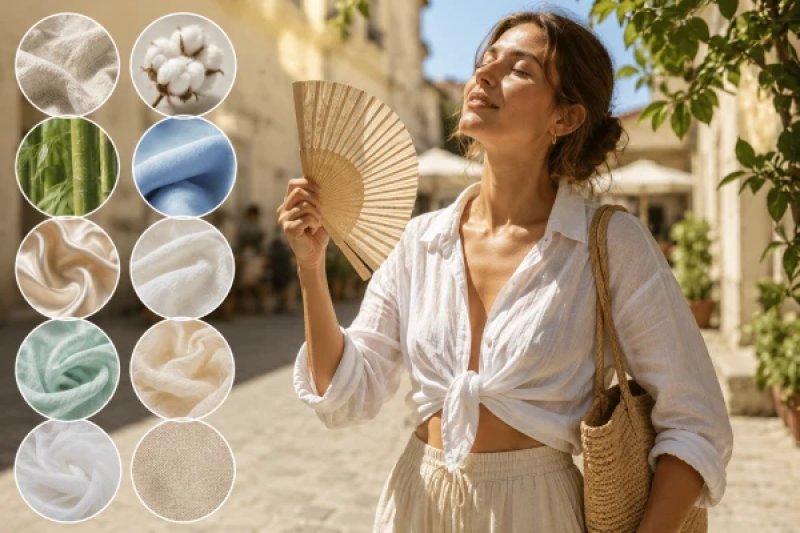
When the thermometer rises higher, the right choice of clothing becomes a matter not only of style but also of well-being. The fabric largely determines how comfortable a person will feel in hot weather. Experts from **UnitedLace** have shared which materials are best suited for a summer wardrobe and which fabrics should be avoided on hot days. ## Why fabric matters During heat, the body cools down through the evaporation of sweat. If clothing does not allow air to pass through well or retains moisture, the body begins to overheat, and the fabric becomes damp, heavy, and unpleasant against the skin. **The ideal material for summer should:** * allow air to pass through well; * absorb and quickly evaporate moisture; * dry quickly; * not cling to the body; * be light and comfortable to wear. ## Linen — the best choice for heat Linen is rightly considered one of the most comfortable fabrics for hot weather. Thanks to its natural structure, it provides excellent ventilation, quickly absorbs moisture, and evaporates it just as quickly. Moreover, linen clothing does not contribute to overheating, and it becomes softer after each wash. Linen is perfect for shirts, trousers, sundresses, and dresses.  ## Cotton — a proven classic Cotton remains one of the most popular materials for summer clothing. Its lightweight varieties — batiste, muslin, and poplin — are particularly suitable. This fabric is pleasant against the body, allows air to pass through well, effectively absorbs sweat, and is suitable for everyday wear. ## Bamboo — natural cooling effect Bamboo fiber can help the body maintain a comfortable temperature. This fabric is soft, wicks moisture away well, is suitable for people with sensitive skin, and has antibacterial properties. ## Tencel (lyocell) — a modern material Tencel is made from wood cellulose. It feels pleasant to the touch, allows air to pass through well, quickly wicks moisture away, and does not create a feeling of stuffiness even on a hot day. Additionally, clothing made from Tencel looks elegant and retains its shape almost perfectly. ## Silk — lightness and natural coolness Despite its delicacy, natural silk regulates body temperature well. It remains cool to the touch, is pleasant against the skin, and is especially popular for creating summer evening looks. ## Viscose — an affordable alternative to natural fabrics Viscose is made from natural cellulose, so it has good breathability. It is lightweight, drapes beautifully, and is suitable for dresses, skirts, and loose summer clothing, providing comfort even in warm weather. ## Chiffon — an almost weightless material Chiffon is considered one of the lightest fabrics. It is hardly felt on the body, allows air to pass through excellently, and enables the creation of loose summer looks that do not restrict movement. ## Muslin — softness and breathability Thanks to its loose structure, muslin ensures constant air circulation. It does not cling to the skin even in heat, remains light and comfortable, making it especially popular for sewing summer clothing. ## Thin cotton (voile, lawn) Thin varieties of cotton are perfect for urban heat. This fabric allows air to pass through well, feels pleasant to the touch, and remains one of the most practical for everyday wardrobes. ## Linen and cotton blend The combination of two natural fibers brings together the advantages of both materials. This fabric is well-ventilated, wrinkles less compared to pure linen, and is easier to care for, while still maintaining a cool feel. ## Which fabrics are better left until autumn In extreme heat, experts recommend avoiding clothing made from materials that do not allow air to pass through well and retain heat as much as possible. These include: * polyester; * acrylic; * nylon; * heavy denim. Such fabrics create a kind of "greenhouse effect": moisture evaporates poorly, the body overheats, and clothing becomes damp more quickly, causing discomfort. ## How to choose clothing for hot weather Experts recommend following a few simple rules: * choose predominantly natural fabrics; * prefer light-colored clothing that heats up less in the sun; * pay attention to loose cuts and light thread weaving; * avoid overly dense and multilayered materials. In summer heat, comfort largely depends not only on the style of clothing but also on the fabric. Linen, cotton, Tencel, bamboo, and other "breathable" materials help the body cope with high temperatures more easily, while synthetics often enhance the feeling of stuffiness. A well-chosen summer wardrobe will allow you to feel comfortable even on the hottest days.