

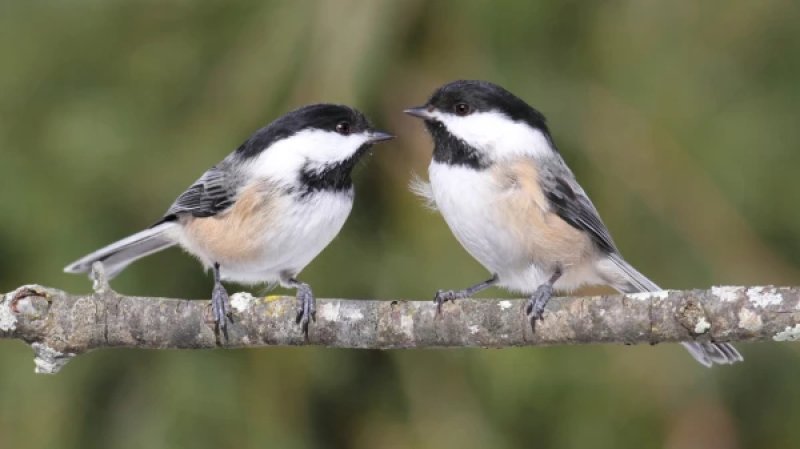
Scientists have found that birds of the tit family value intelligence and are willing to change partners for a smarter male. This conclusion was reached by the authors of a study published in the journal eLife. They discovered that female black-capped chickadees actively seek males with more developed cognitive abilities to increase the chances of offspring survival. **Monogamy in Question** For a long time, it was believed that black-capped chickadees — tits of North America — were monogamous. However, genetic studies have shown that nests often contain chicks from different parents. This means that both males and females can mate with other individuals. The researchers decided to observe the chickadees and set up several feeders in the Sierra Nevada mountains, placing colored rings on the birds' legs. Each feeder was programmed to dispense food only to birds with a specific color ring. Thus, the birds had to remember which feeder was intended for them. Over three years, the scientists assessed the cognitive abilities of the birds and conducted DNA testing. **Infidelity and Intelligence** About one-third of the chicks of black-capped chickadees were the result of infidelity. It turned out that: - About one-third of the chicks (30%) were the result of infidelity. - In 70% of nests, there was at least one chick from another male. - Males with better cognitive abilities produced more chicks outside the mating period: six to seven a year, compared to one or two for less intelligent males. - Females that had poorer memory for feeders more often had chicks from different fathers. **Why Females Choose Smart Males** Scientists suggest that females are looking for good genes for their offspring. Scientists suggest that females are looking for good genes for their offspring. How they determine intelligence remains a mystery. Perhaps they recognize males by their flock, as chickadees live in groups of 6-12 individuals in winter and assess their abilities. These tits may recognize individual birds by their sounds. The study shows that females exhibit independence in choosing partners. "This is compelling evidence that females are seeking good genes for their offspring," notes study author Carrie Branch.