

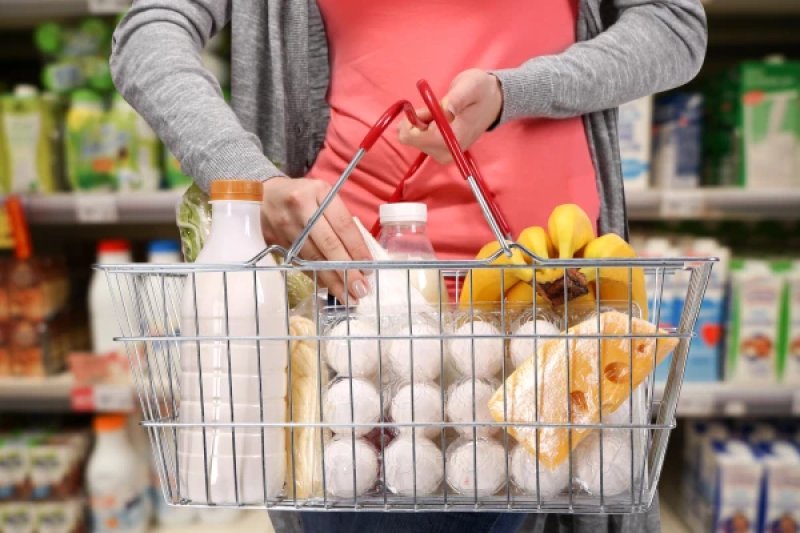
This is in theory. What happens in practice can be found out by visiting the nearest supermarket. ## You will be monitored There are concerns that cunning supermarkets will pay less tax while keeping prices the same. Or even increase them. To prevent this from happening, the authorities promise to monitor stores using a monitoring system. This was announced at an event organized by the Consumer Rights Protection Center (CRPC) by the Deputy State Secretary of the Ministry of Economics, Edijs Šaicāns. In response to a question about possible sanctions against unscrupulous entrepreneurs, Šaicāns philosophically noted that the most serious punishment would be the failure of the initiative itself. In his opinion, no one wants that. In turn, the director of the CRPC, Zaiga Liepiņa, stated that the center would monitor the application of the reduced VAT rate within its competence. ## Traders swear not to cheat The Executive Director of the Latvian Association of Food Traders, Jānis Dubults, claims that there are no grounds to fear the unscrupulous application of the reduced VAT rate. "Everyone is interested in ensuring that the tax reduction fully reaches consumers, and that is exactly what will happen," he solemnly promised. A representative of a local egg production factory, Toms Auškaps, noted that the main issue is how honestly producers will maintain wholesale prices for stores and how responsibly retail chains will pass on the VAT reduction to end consumers. Auškaps asserts that everyone understands the importance of this initiative, as society and the media will closely monitor their actions. At the same time, he was quick to state that the VAT reduction does not mean that prices will remain unchanged – it is not a fact that after the tax reduction, eggs in Latvia will become cheaper. Thus, the price of eggs traditionally changes depending on the season: in summer it is usually lower, while in autumn and winter it rises due to reduced supply. Therefore, market mechanisms will still determine price levels. And what do Lithuanians and Estonians have to do with it? Minister of Economics Viktors Valainis explained that it is impossible to reduce VAT only for products from Latvian producers, as Latvia is part of the single market of the European Union. EU legislation does not allow for different tax rates for domestic and foreign goods. According to the Ministry of Finance, the new measure will cost the state budget about 10 million euros. Other estimates suggest it could be 30 million euros (see economists' comments). According to the minister, the reduction of VAT has two main goals: to reduce the cost of living in Latvia and to increase the competitiveness of Latvian producers. In addition to monitoring food prices, the authorities will analyze how the production capacities of local enterprises and the share of Latvian products in the domestic market change. Valainis also reported that calculations show that if residents increase the share of Latvian-origin products in their purchases by at least 10%, it will create about 12,000 new jobs. ## From paycheck to paycheck Šaicāns emphasized that when assessing the impact of the reform on the budget, it is important to distinguish between gross and net revenue losses. Formally, the application of the reduced VAT rate means a reduction in budget revenues. However, this money will not disappear from the economy. According to him, many residents of Latvia live "from paycheck to paycheck" and do not have savings. If they pay less for bread, milk, meat, and eggs, the freed-up funds will be spent on other goods and services that they could not afford before. Therefore, the final effect on the economy will differ from the initial calculations. Moreover, if lower prices lead to increased consumption of these products, some of the budget losses may be compensated. This will become clear after the monitoring is completed, when sales volumes are analyzed. ## What will become cheaper As reported by the newspaper "SEGA", starting from July 1, 2026, the VAT rate on a number of food products has been reduced from 21% to 12%. The benefit will be in effect until June 30, 2027. The reduced rate applies to four main groups of products: * all types of bread; * cow, goat, and sheep milk, including lactose-free; * fresh chilled meat of chicken, turkey, duck, and goose, as well as poultry offal, including processed, boneless, sliced, and minced meat; * fresh unprocessed chicken eggs. At the same time, the reduced rate will not apply to: * frozen meat; * sausage products and smoked meats; * sweet pastries, cakes, and pies; * crackers, croutons, and breadcrumbs; * ultra-pasteurized (UHT) milk; * condensed milk; * dairy products with additives; * plant-based milk alternatives (e.g., oat and almond drinks); * minced meat if the salt content exceeds 1%.