

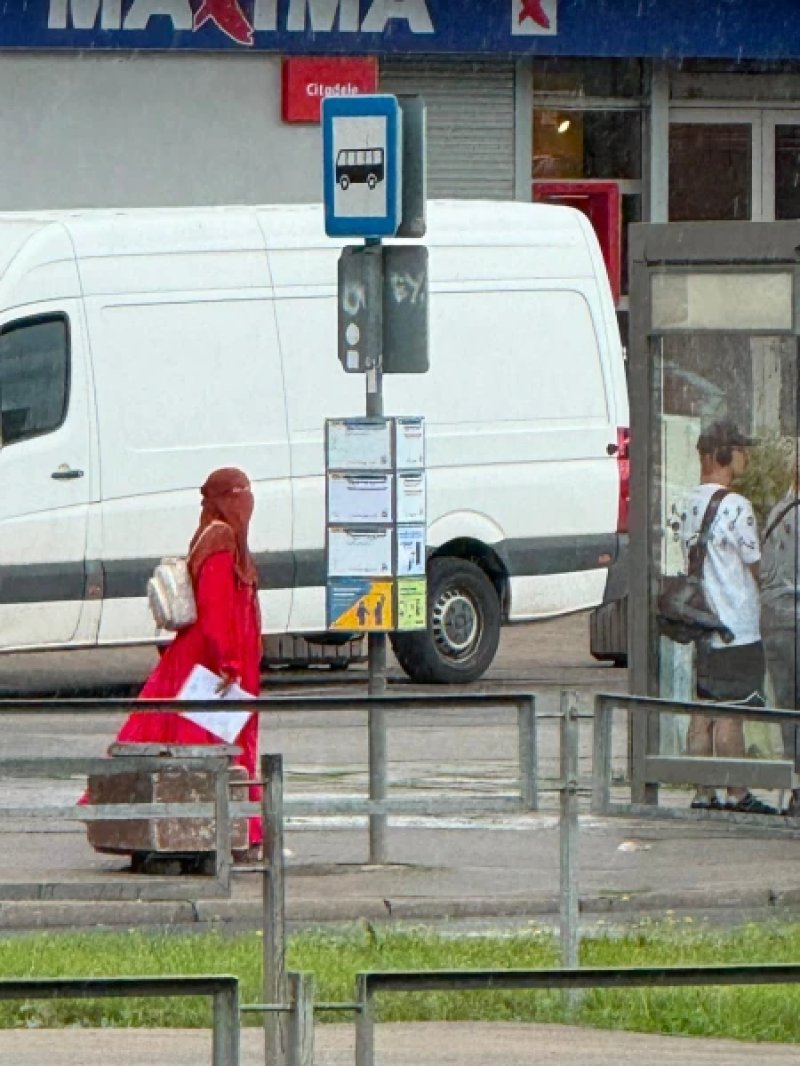
In a number of European countries, wearing such clothing in public places is prohibited; however, there is currently no such ban in Latvia. Back in 2017, the government supported the relevant bill and submitted it for consideration by the Saeima. However, the relevant committee requested the Ministry of Justice to provide additional clarifications on the necessity of such regulation, after which the progress of the bill stalled. It has not returned to the parliamentary agenda since. The reason for the new wave of discussions was a post by Riga City Council member Liana Langa (National Alliance). On the social network X, she posted a photo of a woman spotted in Riga wearing Muslim clothing that covered her face and called on the government to finally adopt the corresponding ban. According to Langa, the ban on face covering in public places in Riga and throughout Latvia is a matter of security. "In my opinion, burqas and hijabs are unacceptable in our Western cultural space. It is also unacceptable when Bolt couriers cover their faces, as surveillance cameras cannot identify them, and in this way, some people hide that they are here illegally," the deputy stated. Government representatives do not rule out that they may return to this issue in the future, but emphasize that the cabinet currently has more priority tasks. Interior Minister Janis Dombrava (National Alliance) admitted that he was sure that the relevant law had already been adopted. "Honestly, I was convinced that this bill was passed. I remember all the discussions and exceptions that were provided for sports activities and very cold weather. If it really turned out that the bill got stuck and was not finally adopted, then, of course, it would be worth correcting that," the minister said. For his part, Justice Minister Edward Smiltenis (United List) noted that this issue is currently not a top priority for his department. Meanwhile, several countries in the European Union, including France and Belgium, have had a full or partial ban on wearing clothing that completely covers the face in public places for many years. Whether Latvia will follow this example remains unknown. However, the discussion about the possible return of the relevant bill to the political agenda is gaining momentum again.