

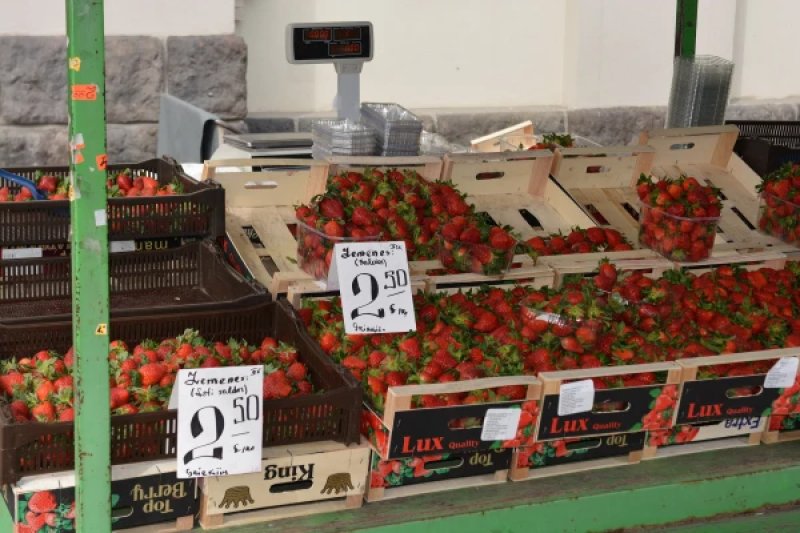
After one such complaint, PVD inspectors, along with a 360 Ziņas film crew, checked a retail outlet at the Riga Central Market. By the time they arrived, there were no strawberries labeled as 'Latvian' left — only Polish strawberries were being sold. However, the inspection still revealed a violation. As stated by Iveta Dervina, an inspector from the Riga City PVD, the price tag indicated that the cherries were imported from Hungary, while the accompanying documents confirmed their Greek origin. An administrative protocol was drawn up against the seller for incorrect labeling. According to PVD, this is already the second such case in July. A few days earlier, inspectors discovered that Polish strawberries were being sold as Latvian. Additionally, sellers often mix berries from different countries of origin, which further complicates control. The service notes that identifying such violations is not always easy. Sometimes the origin can be determined by the packaging or transport containers, but often the products are transferred into common containers, making it nearly impossible to distinguish between batches. Farmers also acknowledge that it is almost impossible to determine where the berries were grown just by their appearance. Many countries use the same varieties and planting materials, so imported and local products often look identical. PVD reminds that customers have the right to ask the seller to show documents confirming the product's origin. Honest traders usually provide them without objections. Fines are imposed for providing false information about the country of origin of the products: up to 500 euros for individuals and up to 1500 euros for legal entities. The agency urges residents to report such cases to combat unfair trading and protect the interests of consumers and local producers.