

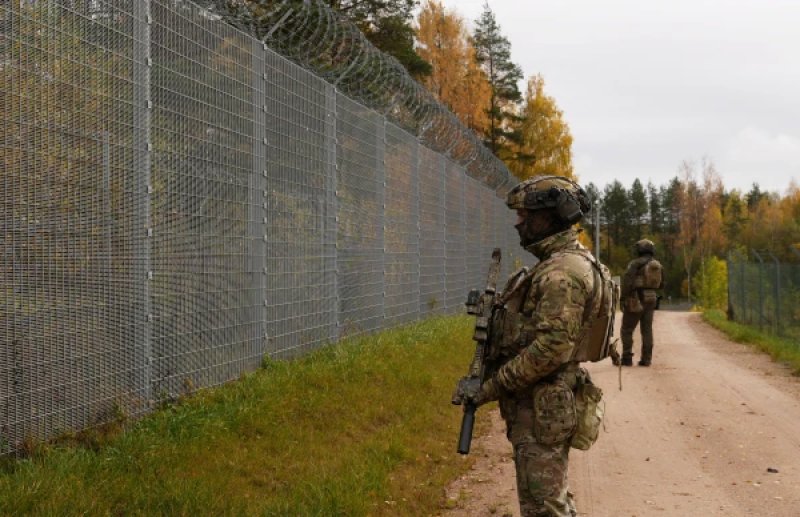
The State Border Guard considers it necessary to expand the participation of the National Armed Forces in securing Latvia's external border. This was stated by the head of the service, Guntis Pujats, in an interview with Latvian Radio. According to him, the army is already providing assistance to the border guards, but the existing resources are insufficient. He believes that it is necessary to reconsider the format of cooperation and increase the number of military patrols, as well as units that can participate in detaining violators and preventing illegal border crossings. Pujats emphasized that the main challenges are currently concentrated on the Latvian-Belarusian border. At the same time, he noted that the State Police is also providing significant support to the State Border Guard. The head of the Border Guard also expressed his opinion on the reasons for the increased migration pressure. In his assessment, several factors influence the situation, including Latvia's support for Ukraine, the ban on public media broadcasting in Russian, narratives spread by Russia, and the approaching parliamentary elections. According to Pujats, similar spikes have already been observed after important political decisions or other significant events. In his opinion, the goal of such actions is to increase internal tension in Latvia and influence public sentiment before the elections. Authorities still consider the situation at the border to be tense. That is why the government previously extended the enhanced security regime at the Latvian-Belarusian border until December 31. Statistics show that migration pressure remains high. In 2025, the State Border Guard prevented 12,046 attempts at illegal border crossings, while allowing 31 people to enter for humanitarian reasons. Since the beginning of 2026, 7,634 attempts at illegal border crossings have already been prevented. These figures remain one of the arguments for maintaining the enhanced security regime and attracting additional forces.