

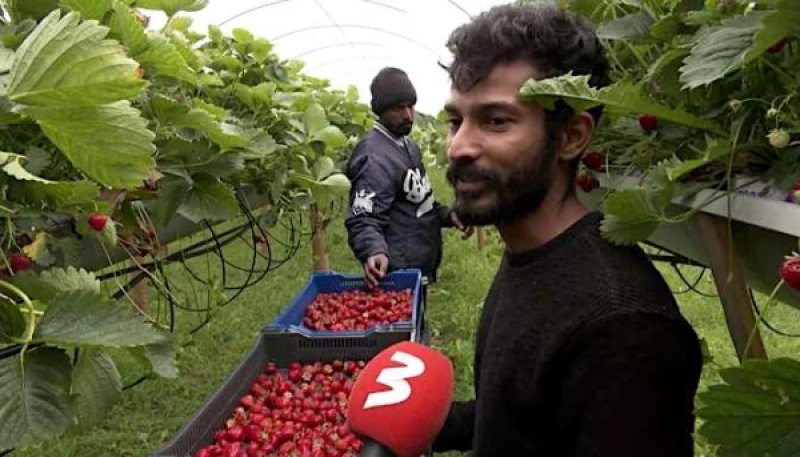
Latvian strawberries remain one of the main symbols of summer, however, behind the rich harvest lies a problem that farmers have been facing for several years — a severe shortage of labor. This is reported by [TV3 News](https://tv3.lv/zinas/latvija/latvijas-zemenu-laukos-arvien-vairak-strada-viesstradnieki-vietejo-interese-saruk/). One of the largest strawberry producers in Kurzeme is the farm "Latvijas Zemenes". A few years ago, berries were grown here in large open fields, and during the harvest, up to 100 workers were needed daily. Now the farm looks different. A significant part of the plantations has been moved under tunnel covers, which has reduced the need for labor and made cultivation less dependent on the whims of the weather. The chairwoman of the board of LLC Lubeco, Zane Silgale, explains that the changes were not driven by a desire to modernize production, but by a lack of people. > "It all started when we could not find workers. We had ten hectares of strawberries, the fields were red with berries, but the harvest was rotting because there was no one to pick it. Every year, there are fewer local pickers," she says. Today, about 25 foreign workers are employed at the enterprise, while there are almost no local residents among the pickers. According to Silgale, job advertisements no longer attract interest from Latvians. > "Now most of the workers are newcomers. Some do not want to pick berries, while others think our farm is too far away, in the countryside," she notes. One of these workers is Mahesh from India, who has been in Latvia for two months. He said he is satisfied with his job. > "This is a good job. We pick berries in the morning and after lunch, and I really like Latvian strawberries as well," he says. Despite the use of modern technologies, it is still impossible to completely replace manual labor. As the farm manager notes, picking strawberries remains physically demanding work, and many seasonal workers do not return the following year, so new employees have to be trained almost from scratch. For buyers, this means that the cultivation of local strawberries is increasingly dependent not only on the weather but also on the availability of workers. The lack of labor has already become one of the reasons why farms are transitioning to more modern methods of berry cultivation. Although the main strawberry harvesting season is already coming to an end this summer, the work for farmers does not stop. They are currently preparing the plantings for the next season, caring for the plants, and assessing what changes will help achieve a better harvest in the future. The shortage of local workers is gradually becoming one of the main problems for the Latvian berry industry, changing approaches to cultivation and the organization of seasonal work.