

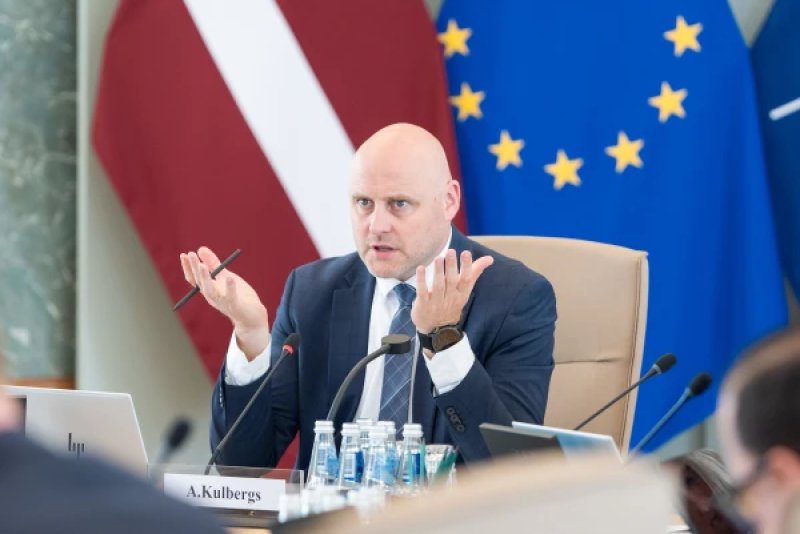
## Efficiency – three percent It was noted that out of 61 priorities, only 3 have been fully completed, the rest are in progress. However, just the day before yesterday's meeting, the head of government suggested that it would not be possible to implement all declared priorities before the elections. One way or another, until today, Kulbergs can consider himself lucky – without making any special decisions, the new prime minister managed to significantly raise the rating of his political union. However, as practice shows, it will be difficult to stay at the top of the political Olympus for a long time without providing the people with some "gifts" (read – important decisions for society). ## Where to save? The toughest challenge awaiting the prime minister is the issue of airBaltic. The work on the business plan is about to be completed, and the government will have to decide on... financial support for the national airline. It is clear that this will hardly evoke an explosion of positive emotions among voters. Meanwhile, Finance Minister Maris Kucinskis, outlining his priorities at yesterday's meeting, again mentioned the determination to cut budget expenditures – but already in the draft budget for the next year. Thus, a final decision has been made not to touch this year's budget. However, this year the finance minister hopes to advance a new equalization fund model, that is, to make the system of redistributing funds from wealthy municipalities to poor ones fairer and more effective. ## Remembering the elderly Yesterday, the head of the Ministry of Welfare, Reinis Uzulnieks, stated the necessity to make a decision on introducing basic pensions before the elections. The proposal from the Ministry of Welfare stipulates that the introduction of basic pensions will begin on January 1, 2027 – with an increase in the supplement for insurance experience up to December 31, 1995, and the introduction of a supplement for insurance experience after January 1, 1996. At the first stage, such supplements would affect seniors aged 85 and older. Currently, there are 56,760 such individuals in Latvia. The Ministry of Welfare notes that this age group has the lowest pensions in the country – the average old-age pension for those over 85 is 503.71 euros per month, while the average old-age pension overall is 640.67 euros. Minister Uzulnieks asserts that the decision cannot be postponed. According to the minister, the Ministry of Welfare has done the necessary preparatory work, so the government has all the prerequisites to make a decision on "one of the most important reforms of the pension system in recent years."
