

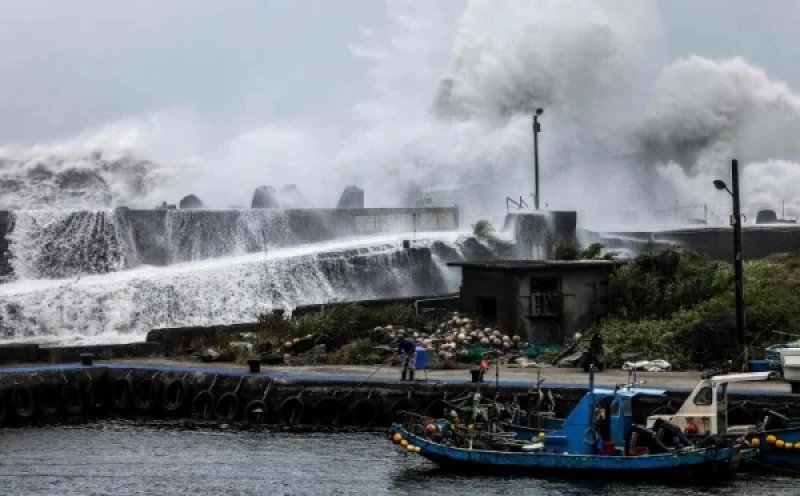
In eastern China, about **1.8 million people** have been evacuated due to the approaching typhoon **'Bavi'**. According to meteorologists' forecasts, the storm will reach the coast near the city of Wenzhou — a major port center with a population of about 10 million people — on Sunday morning local time. According to Chinese state media, more than **1.7 million residents** have been evacuated in the coastal province of Zhejiang, while around **100,000 people** have left their homes in the neighboring province of Fujian. Although the typhoon is gradually weakening, it still poses a serious threat due to heavy rains that could lead to widespread flooding and landslides. Before approaching China, 'Bavi' had already struck the southern Japanese islands and caused damage to the American island of Rota near Guam. On the islands of Okinawa Prefecture, wind gusts reached **almost 200 kilometers per hour** in some areas. On Ishigaki Island, strong winds scattered debris across the streets, and vessels in the port were damaged. The typhoon was accompanied by heavy downpours. Due to the bad weather, about **24,000 households** on Ishigaki were left without electricity. Ferry services were suspended, and **345 flights** were canceled. The island is considered one of Japan's popular tourist destinations. Although the typhoon will not pass directly over Taiwan, the island's authorities have also taken precautions. The heaviest danger comes from torrential rains, especially in mountainous areas. About **14,000 people** have been evacuated from the most dangerous areas of Taiwan. Additionally, hundreds of flights have been canceled, high-speed train services have been reduced, and almost all cities have declared an extra day off due to the expected bad weather. The effects of the storm are also being felt in the Philippines. Although the typhoon did not directly affect the country, it has intensified the seasonal monsoon. According to local media reports, **at least 17 people** have died as a result of landslides and flooding caused by the bad weather. Authorities in East Asian countries continue to prepare for the typhoon's passage and warn the population of the ongoing danger. The main threat now comes not so much from hurricane winds, but from torrential rains that could cause new floods, landslides, and disruptions to transportation and utility services.
