

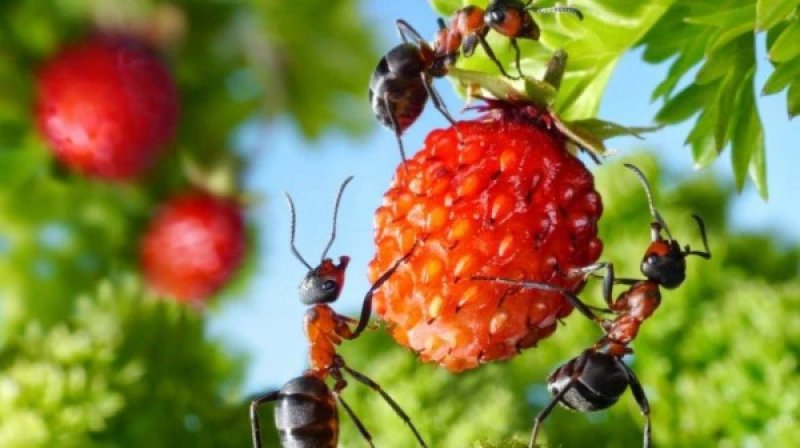
Biologist Maria Kombarova explained whether there are really more ants, if they are dangerous to humans, and how to get rid of them. **Don’t Trust Your Eyes** In nature, there are visible and invisible processes. Visually, there are indeed more ants (two species are common — yellow field ants and black garden ants), says the expert. However, their numbers compared to last year have likely not changed. Ants have simply started to bring more of the above-ground parts of their nests to the surface. Their usual underground homes have been flooded by heavy rains. The flooding of natural habitats forces ants to create looser, more visible nests in open areas so that they can ventilate better. "It is also noticeable how ants ventilate their larvae. After rain, they pull them out of the nest to prevent them from getting moldy, covered in fungi, or becoming ill from excessive moisture. Therefore, it seems to people that there are more ants. In reality, their numbers are not increasing," explained Maria Kombarova. **An Ant Feels at Home Everywhere** Greenhouses, garden beds, lawns, building materials — everything that humans have built or placed on their plots is suitable for the foundation of an anthill. Ants are their own masters and do not ask anyone if they can settle here. They find forest edges, meadows, garden beds, and greenhouses suitable. They perceive this environment as natural. "Ants have even adapted to urbanized environments — pollution and compacted soil. They consider our summer houses and private homes as their natural habitat. Therefore, they are always at home, and we are their guests even at our favorite summer house," says the expert. **How Ants Are Dangerous to Humans** Ants invade human dwellings in search of food. They like jam, preserves, sugar, and grains. However, on their tiny legs, ants carry various microorganisms, including pathogens that live in the soil. "Eating food that ants have run over is roughly the same as eating soil with numerous fungi, bacteria, and viruses living in it. It doesn’t matter how small a grain of soil an ant leaves behind. If all this gets into the intestines, there will be serious problems," warns Maria Kombarova. **How Ants Are Dangerous to Garden Plots** Black garden ants, for example, when settling under paving stones, destroy their foundations. This threatens all small architectural forms. In garden beds, they can bury small plants with soil while building anthills. The more rain and humidity, the higher the soil accumulations. Stems and leaves rot due to this, becoming infected with bacterial and fungal diseases. Ant activity can provoke late blight in potatoes and various diseases, such as black leg in cabbage. In the underground cavities dug by ants in hay meadows, cows, sheep, and goats can break their legs. Roots of plants that end up in these underground cavities do not receive enough nutrients, causing the plants to wilt and die. Additionally, these hardworking insects acidify the soil because their waste products are acidic. To top it all off, ants farm aphids, collecting honeydew — a liquid with a small amount of sugar. Ants transport young aphids to new plants and protect them from predators. Fighting aphids is pointless; for ants, it’s like a pastry, but they can easily do without such a dessert. **Folk Methods of Fighting Ants** An anthill can be dug up to let sunlight reach the larvae and eggs. They quickly die in the light. One can generously sprinkle the nest with ash. Ants have a genetic memory that the smell of burning means fire, and they need to flee. However, they may leave and then return. A more reliable method would be to sprinkle salt, baking soda, dolomite flour, or chalk powder — substances that neutralize the soil and disrupt the familiar microclimate for ants. Neutral soil is not as appealing to ants, and they leave. Additionally, one can place mint leaves or chopped garlic greens on the disturbed nest. Their essential oils are also unappealing to ants. Some even pour boiling water on the disturbed nest, but this is already an ethical choice regarding how humane such a solution is. "Experienced gardeners specifically cultivate large bushes of mint. After digging up a nest, they cover it with mint, garlic, and garlic shoots to unleash a powerful chemical strike with the essential oils contained in them. But folk methods work when applied systematically and regularly across the entire plot simultaneously," says the expert. **Scientific Methods of Fighting Ants** Special ant control products affect the nervous system of ants. It stops functioning normally, leaving the ant disoriented and unsure of where to go or what to do. Gradually, ants disperse from the nest, not eating, drinking, or doing anything, and eventually die. "Ants are colonial creatures. Some are builders, some are foragers, some are nurses for the ant queen, and then everything collapses. There are no nurses, no suppliers of food and water. And that’s it; the colony simply dies within 2-3 days," clarified Maria Kombarova. She added that chemical ant control products are not dangerous for humans and pets.