

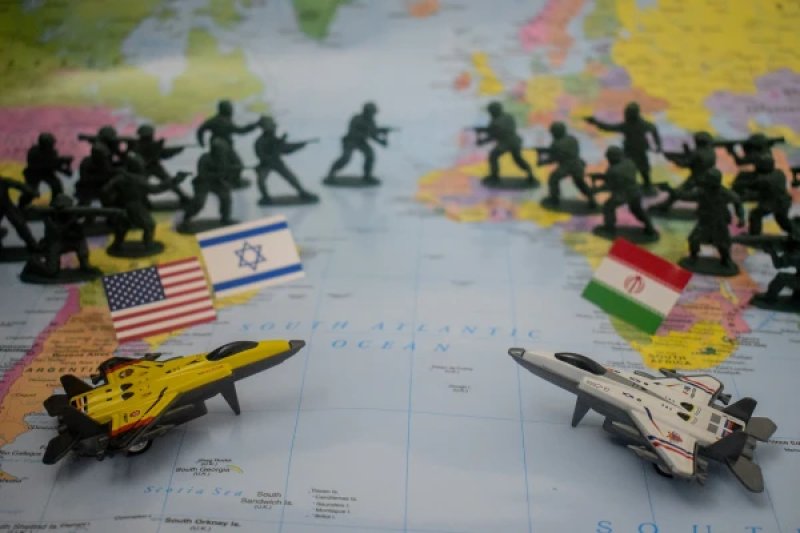
In several Gulf countries allied with the US, air raid alerts were declared on the night of Sunday, July 12, following a new wave of American strikes on Iran. Alarm sirens sounded in Bahrain; the Ministry of Interior urged residents to remain calm and take shelter in a safe place. In the UAE, the Ministry of Defense stated that air defense forces were repelling missile and drone attacks, and the population was warned of the threat of a missile strike. Qatar's authorities described the situation as serious in a message to the public on social media platform X: the Ministry of Interior urged residents to stay home, avoid going outside, and keep away from windows and open spaces. In the capital of Qatar, Doha, journalists from the AFP news agency heard explosions and observed missile interceptions over the city; residents received messages on their phones urging them to stay in safe places. The country's Ministry of Defense reported repelling a missile strike. ## ## IRGC Claims Strikes on American Bases in the Region and a Vessel in the Strait of Hormuz The Iranian Revolutionary Guard Corps (IRGC) claimed to have struck the American Al-Udeid airbase in Qatar with ballistic missiles, allegedly destroying a fighter jet maintenance center and command post, as well as the port of Duqm in Oman, which Tehran claims is used by American aircraft carriers. The IRGC also claims to have attacked "key military infrastructure targets" at Prince Hassan Air Base in Jordan, where it allegedly destroyed a command post and hangars for MQ-9 drones with ballistic missiles. Independent confirmation of these claims has not yet been received. Tehran's statement indicated that a second vessel in the Strait of Hormuz had been put out of action within the last 24 hours. Last night, American military forces launched a third wave of strikes on Iran within a week. According to the US Central Command (CENTCOM), approximately 140 military targets were hit: missile and drone positions, naval facilities, ammunition depots, communication nodes, and coast guard stations. The strike followed after the Iranian IRGC attacked a vessel in the Strait of Hormuz. ## ## Violation of the Ceasefire Between the US and Iran On June 17, the US and Iran signed a framework agreement that provided for a cessation of hostilities and the unblocking of strategically important waters. However, on June 25, Iranian military forces attacked a civilian tanker in the Strait of Hormuz using a kamikaze drone, and the next day, in response, the Americans struck the Islamic Republic. This has happened several times since, with neighboring Bahrain and Kuwait coming under Iranian fire. Each time, American military officials reported that they targeted military sites in Iran, such as radars and storage facilities for missiles and drones. On July 8, speaking at a NATO summit in Ankara, US President Donald Trump stated that the memorandum of understanding with Iran was no longer in effect. The White House head called Iranian leaders "evil, sick people," stating that dealing with them was "a waste of time." The US reinstated oil sanctions against Iran. On July 11, Reuters reported that Iranian officials in closed negotiations with the US blamed "uncontrolled elements of the system" for the new strikes on vessels in the Strait of Hormuz. "They told us: 'We failed. We made a mistake. Let's talk,'" a source in Washington told the agency.