

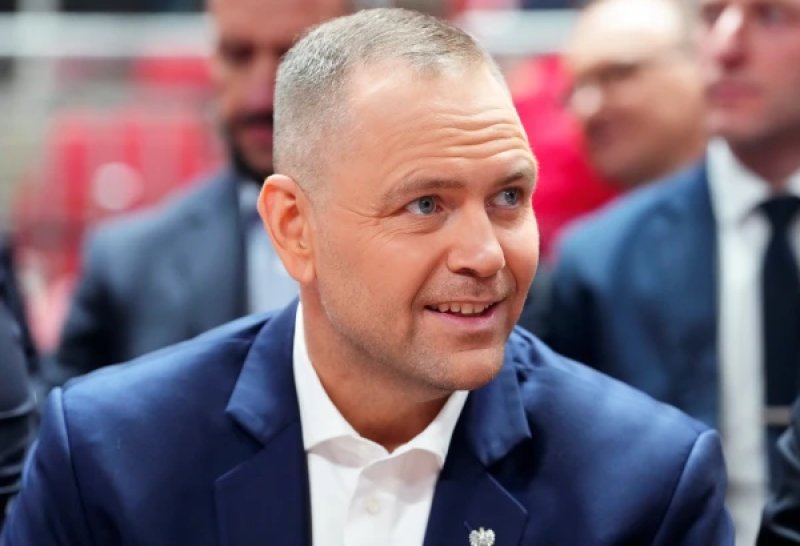
The main part of the ceremony attended by the Polish president took place at the church complex in Radruż in Subcarpathia - a symbolic place also because Polish residents were brutally killed there in 1944. Karol Nawrocki laid wreaths at the monument to the victims and the brotherly grave of the victims. ## ## Nawrocki: “Is death yesterday something softer than death tomorrow?” In his speech, Nawrocki quoted lines from Zbigniew Herbert: “Ignorance of the missing undermines the reality of the world.” This quote became a starting point for reflections on the meaning of historical memory. “We do not agree to forget about the 120,000 Poles - civilians, women, and children, brutally killed by Ukrainian nationalists,” the president stated. He emphasized that the memory of the victims and the establishment of historical truth are necessary not only for restoring justice but also for building the future. “To those who speak of today’s geopolitics, of a world where war is ongoing, who discuss state interests, I want to remind: the death of 14-year-old Jadwiga Romanik - with her threshold of pain, with what her parents experienced, with what she felt in her heart when she was killed by Ukrainian nationalists - is the same death that today 14-year-old Ukrainians experience at the hands of the bandits of the Russian Federation,” Nawrocki said. “Is death yesterday something softer than death tomorrow?” ## ## Kosińak-Kamysz: “A good future needs truth” On the anniversary of those events, the head of the Ministry of Defense, Władysław Kosińak-Kamysz, who was in Volhynia, Ukraine, also spoke. He called on the Ukrainian side to fully commemorate the victims and ensure the possibility of their dignified burial. “Do not cause pain. Do not glorify those who bring pain and suffering,” he said, calling these words the “eleventh commandment.” He emphasized that only truth and the dignified commemoration of all victims can lead to genuine forgiveness and sustainable reconciliation. The minister noted that he arrived in Volhynia “with a sign of peace and an outstretched hand,” but at the same time pointed out that the memory of the murdered remains a duty for both Poland and Ukraine. Earlier, Polish Prime Minister Donald Tusk announced in an online address the creation of a Wall of Memory for the victims of the Volhynian Massacre, which he called genocide. He urged the Ukrainian side to honestly confront its history. ## ## Tensions in Polish-Ukrainian Relations This year, the ceremonies are taking place against the backdrop of heightened tensions in Polish-Ukrainian relations due to the naming of one of the Ukrainian units after the “Heroes of UPA.” In response, President Karol Nawrocki stripped Volodymyr Zelensky of the Order of the White Eagle - Poland’s highest state award. Ukraine's position was recently condemned by the European Parliament. In the topic of memory of the Volhynian Massacre, the search and exhumation of the victims of Ukrainian nationalists' crimes is playing an increasingly significant role. Polish authorities have emphasized for many months that the ability to find, identify, and dignifiedly bury the murdered is a key condition for a full understanding and assessment of this tragic page of history. ## ## Symbolic Date July 11 is observed in Poland as the National Day of Remembrance for Poles - victims of the genocide committed by the OUN and UPA in the eastern territories of the Second Polish Republic. This date refers to the so-called Bloody Sunday on July 11, 1943, when UPA units carried out coordinated attacks on dozens of Polish settlements in Volhynia. This was the climax of the Volhynian tragedy, whose victims were mainly civilians.