

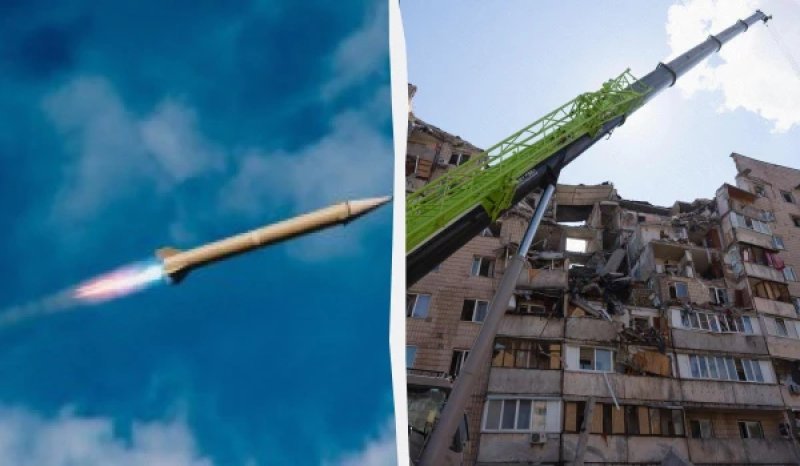
In the two most recent major attacks on Kyiv, on July 2 and July 6, 49 out of 53 ballistic missiles reached their targets. This amounts to over 92% success. Specifically, during the attack on Monday, none of the 29 ballistic missiles were intercepted. In the past week, Ukraine had to face approximately 2,200 strike drones, more than 1,730 aerial bombs, and 106 missiles. While Kyiv's air defense systems have become very effective at intercepting drones—shooting down about 90% of them—this does not diminish the urgent need for missile defense systems, the publication notes. "Experts surveyed believe that this shortcoming cannot be overcome in the short term, especially due to difficulties in acquiring the American Patriot air defense system, the primary means of countering ballistic missiles," the article states. Kyiv is primarily interested in the PAC-2 and PAC-3 options. Each PAC-3 interceptor, which is considered most suitable for intercepting ballistic missiles, costs about $4 million, while a complete launch battery is estimated at around $1 billion. In addition to the cost, there is also the issue of high global demand for these systems. "The biggest problem right now is the war with Iran, which is using a large number of these Patriot missiles... The American industry is unable to produce enough to replenish these stocks, and moreover, Ukraine is not among its priorities," says Oleksiy Melnyk, director of the Razumkov Center. According to him, even if the production technologies for the Patriot are transferred to Kyiv, it would take at least six months for Ukraine to obtain such weapons. In any case, he believes that the "real solution" lies not only in providing such interceptors but also in supplying long-range missiles, such as Tomahawk, or similar weapons capable of depriving Russia of the ability to carry out mass attacks. ## ## Europe Can Do Little According to Christian D. Villanueva, editor of the military-political magazine Ejércitos, Patriot production is occurring at significantly lower quantities than currently required in wartime. "Regardless of how much money Europe wants to invest through PURL, Patriot missiles are produced at the rates at which they are produced," Villanueva explains. He also emphasizes that the problem lies not only with the missile itself and the current demand for it but also with the entire system that supports it: radars, vehicles, launch batteries, licenses, production lines, and so on. Ultimately, despite pressure from Brussels or NATO, it all depends on Trump's approval, which means that "Europe can do little," he concludes. In any case, the Ejércitos editor adds, the process depends on factors such as U.S. export rules and licensing requirements, and even on the presence of Ukrainian specialists on American soil. In short, it will take "many months," he predicts. The UN stated that Russia's attacks in recent months have resulted in the highest number of civilian casualties since 2022. The organization emphasized that preliminary data for June indicates an even greater number of casualties—at least 265 people were killed and 1,816 injured.