

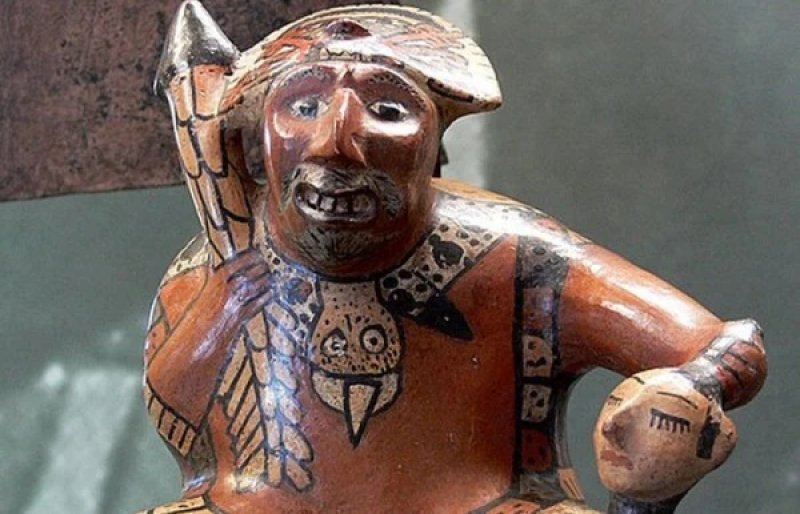
All the figurines are made of unburned clay. Despite the fragility of the material, they have been well preserved due to the dry climate of the coastal desert. The figurines depict men and women with individual facial features, characteristic hairstyles, and elements of clothing, making them a valuable source of information about the life of ancient society. According to scientists, the discovery allows for a better understanding of the social structure of the Caral-Supe civilization. Some figurines are adorned with elaborate headdresses, necklaces, and other signs of high status, while others depict ordinary residents. Particular interest lies in the details of appearance—tattoos, ornaments, and hairstyles—that help researchers reconstruct the cultural traditions of people who lived thousands of years before the rise of the Inca Empire. Experts suggest that the figurines were used in religious rituals. They were likely offered to the gods during ceremonies related to the construction of public buildings, fertility, or the purification of homes. Such items were often buried in the foundations of temples or left in residential complexes as ritual offerings. The Caral-Supe civilization existed approximately between 3000 and 1800 BC. During the time when the pyramids of Giza were being built in Egypt, a society with monumental architecture, a complex irrigation system, and active trade was already developing in present-day Peru. At the same time, researchers note that this culture virtually did not use ceramics and did not create weapons. Currently, all discovered artifacts have been transferred to a specialized laboratory, where they will be conserved and undergo detailed three-dimensional scanning. Scientists hope that further study of the find will reveal even more about the life of one of the most enigmatic ancient civilizations in America.