

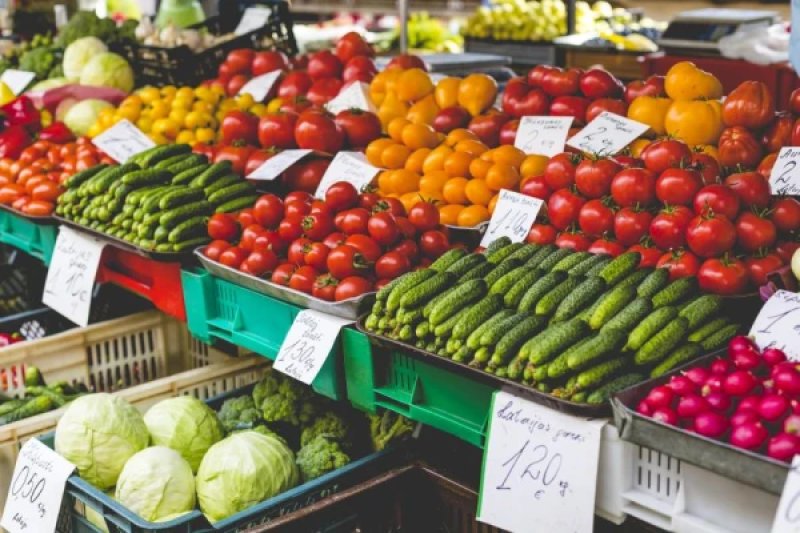
Culinary blogger Pipars, or as he is actually called, Rojs Pukje, after visiting the Agenskalns market, wondered whether markets in Latvia are gradually becoming exclusive shopping places. Previously, markets were associated with fresh, local, and affordable products, but now it seems that only those willing to pay significantly more go there. "I really like the Agenskalns market. I like its atmosphere, architecture, people, and the overall feeling. It’s a place where you want to stop by, have a coffee, stroll around, and support local producers. But every time I see the prices, the same question arises — why? After all, it’s July. In Latvia. The peak season for vegetables and berries," Rojs reflects. At the market, he noticed dill, basil, and parsley for 2 euros per bunch. Cauliflower — 4 euros per kilogram. Tomatoes — 7 euros per kilogram. Raspberries — 10 euros per box, even though it is currently raspberry season. For comparison, he also went to the Central Market, where, although you immediately have to pay about 3 euros for parking, last week dill cost 50 cents, cauliflower — 2.50 euros per kilogram, tomatoes — 2.50–3 euros, cucumbers — about 1.80 euros per kilogram. Rojs ponders: "The difference is significant. Of course, I understand that many factors influence prices. The location of the market, rent, employee costs, purchasing power in a specific area. All of this makes sense. However, the question arises — can such a large difference in prices be explained by just this?" It is also interesting that almost all sellers claim the same thing — products from local Latvian farms. But isn’t it the same at other markets? Or are the tomatoes and cauliflower from some other Latvia? Is it really that farmers have such a poor harvest this year that they have to raise prices to cover losses? Or is the main reason the trading costs and that in certain places people are simply willing to pay more? Another thought came to his mind: "We often say that we will support locals. I completely agree with this. I myself willingly choose products from Latvian producers. But should this always mean that we have to pay twice as much? Next to them are Lithuanian cucumbers, strawberries, or other vegetables that often cost half as much. How do they manage to achieve this? Larger farms? More efficient logistics? Lower costs? Or have we simply accepted as a given that the word 'local' can command any price?" And one more thing — we often hear the argument that local products are tastier. Perhaps. In many cases, Rojs believes this can be agreed upon. But if we were born a few hundred kilometers further, in Lithuania, would we so passionately assert that Latvian tomatoes are better than Lithuanian ones? Hardly. Rojs believes that patriotism plays a role here. And there is nothing wrong with that. However, patriotism alone cannot be the only argument for a buyer to tolerate any price. "I still believe that local farmers need to be supported. Their work is hard, and they deserve fair pay. But buyers also have their limits. Support should not mean that in the middle of the season, vegetables and berries become luxury items. Perhaps the problem is not with the farmers. Perhaps it lies in the structure of market costs. Perhaps it’s with intermediaries. Perhaps it’s with rent. Perhaps it’s simply with demand. But I would like to understand why the same Latvian summer costs almost twice as much at one market than at another. Therefore, I have a sincere question for you. What do you think, why are there such large price differences between Latvian markets during the season? Are they determined by rental costs, product shortages, buyer habits, or something else? And how much are you personally willing to pay for a local product just because it is grown in Latvia?"
