

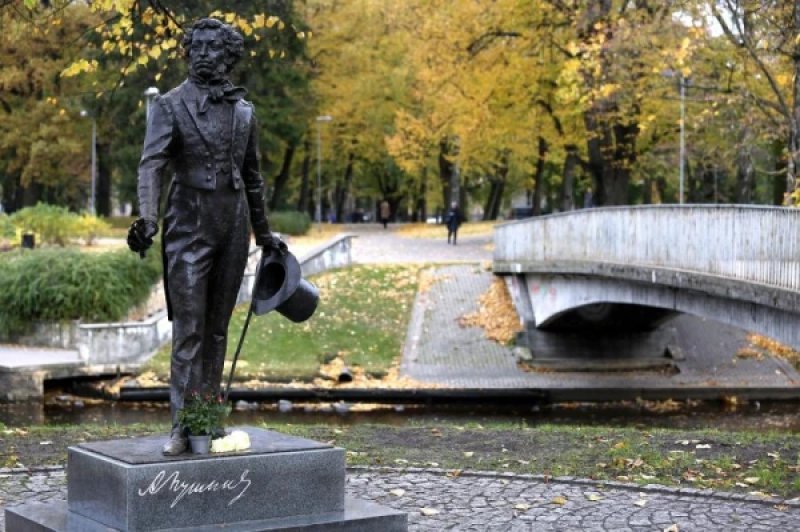
A survey was commissioned to find out what residents of Latvia know about various cultural figures, noted Vita Zelče on the TV24 program "Preses Klubs." The results, according to the professor, were unexpected. The survey showed that the knowledge of Latvian society about figures of Russian culture is still very good. Many people not only recognized these personalities but also to some extent perceived them as part of their familiar cultural space. As an example, Zelče cited Alexander Pushkin. According to her, Pushkin is recognized by name in Latvia better than Raimonds Pauls or Krišjānis Barons. The difference, however, is not very large — it is a matter of a few percentage points, but the fact itself, in her opinion, is significant. A similar picture was observed regarding other classics of Russian literature. Anton Chekhov and Fyodor Dostoevsky were found to be more recognizable by name than Imants Ziedonis and Ojārs Vācietis. In Vita Zelče's opinion, Latvia still lives in a space where the influence of Russian culture is very strong. This concerns not only the informational space in a political sense but also the cultural space in which people have lived, studied, and formed their perceptions for decades. Zelče notes that older generations have significantly better knowledge of figures of Russian culture. This knowledge is also more characteristic of people with a higher level of education. However, the survey revealed an unexpected aspect: among the youth, Latvian young people know Pushkin even better than Russian young people. The professor admits that the survey numbers left her perplexed. In her opinion, these results show that the presence of Russian culture in the cultural memory of Latvia is still very deep. Whether this is good or bad — the professor did not say.