

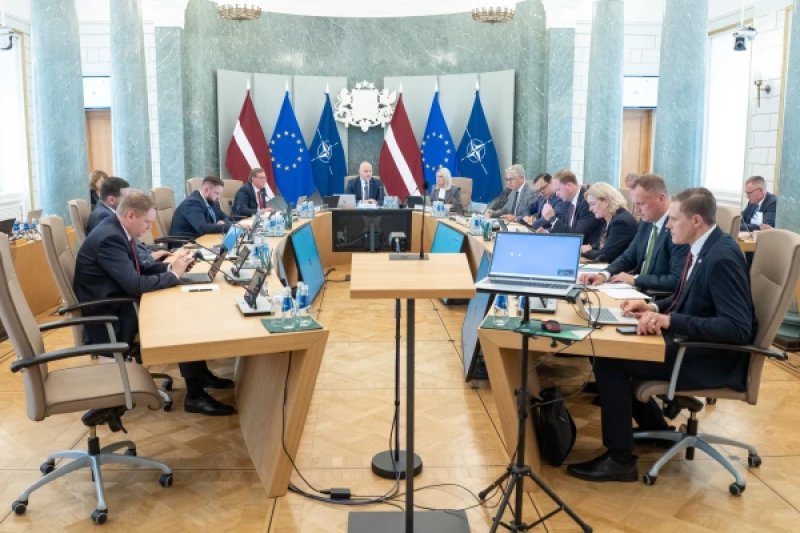
Prime Minister Andris Kulbergs, who had no experience in public administration, was shocked when he learned about the decision-making system in the government. The Cabinet of Ministers is literally overwhelmed with documents that could very well be considered and approved at the ministry level. Why should the government waste time 'stamping' very narrow, specific issues?! Should the government approve, for example, the price list for services of the State Environmental Service or the State Archives? Or regulate the procedure for the artificial insemination of cattle? The answer is quite obvious! On the Cabinet's agenda are, for example, the following documents: Amendment to the Cabinet of Ministers' order of June 12, 2018, No. 267 "on financing the coverage of expenses for the construction project, rent, relocation, and acquisition of equipment at Pils 3, Riga, and the museum storage complex at Pulka 8, Riga" On the resolution of the National Youth Dialogue On ensuring the long-term operation of agricultural vocational education institutions — Bulduri Technical School and Malnava College Amendment to the Cabinet of Ministers' regulations of February 21, 2012, No. 127 "Rules on reportable, registered, and state-supervised infectious animal diseases and the procedure for providing information about them to the Food and Veterinary Service" It is clear that the decision-making system needs reform. And in the government's action plan, which will be adopted next Tuesday, there is a point stating that by October 1, that is, before the elections, amendments will be prepared according to which the government will be freed from this bureaucratic clutter — all special departmental decisions will be made at the ministry level — signed by the minister and/or the state secretary. The government will only consider strategic and conceptual issues and legislative proposals.