

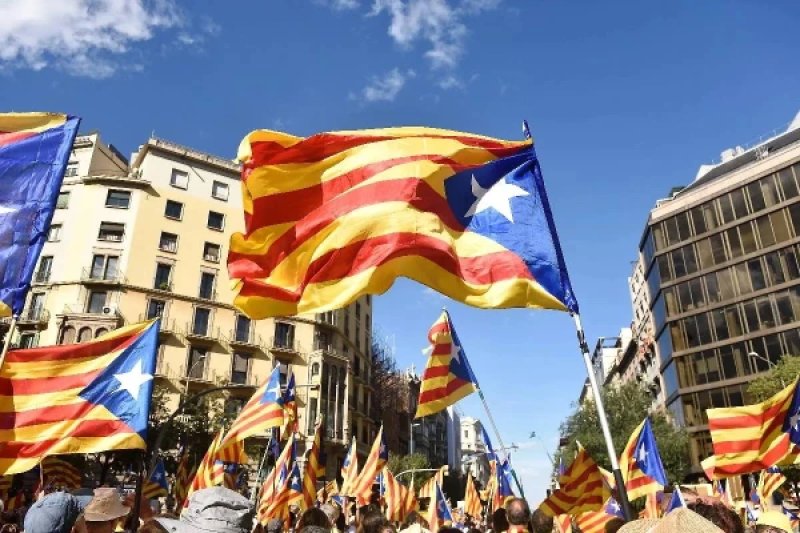
The Court of the European Union ruled that the amnesty law passed by the Spanish Parliament in 2024 concerning participants in the Catalan independence movement does not contradict EU legislation. The court's president, Koen Lenaerts, emphasized that issues of amnesty fall within the competence of member states, thus Spain has the right to make such decisions independently. The court also noted that the cancellation of criminal liability to reduce political tension and achieve national reconciliation does not violate European law. The law was previously approved by the Constitutional Court of Spain. The document has sparked sharp political debates. With the support of Catalan and Basque parties, Pedro Sánchez was able to form a minority government after the 2023 elections. The opposition People's Party labeled the amnesty a political concession to supporters of Catalan independence. Justice Minister Félix Bolaños stated that after the EU Court's decision, there are no longer doubts about the legality of the amnesty. According to him, despite protests, the law has helped reduce political tension in the country. The amnesty applies to most crimes related to the Catalan separatist movement, provided they were not accompanied by violence and did not violate human rights. However, it does not yet apply to the former head of Catalonia, Carles Puigdemont, who lives in Belgium. He faces separate charges of embezzlement of public funds, and the Constitutional Court of Spain will later consider the possibility of applying amnesty to this case. It is worth recalling that in the independence referendum in Catalonia in October 2017, more than 90% of participants voted for the region's separation from Spain, although the turnout was only 43%, and the Spanish authorities deemed the voting illegal. The EU Court's decision has strengthened the position of Pedro Sánchez's government and removed the main legal argument against the law's opponents. However, political disputes surrounding the Catalan amnesty in Spain are likely to continue until the parliamentary elections in 2027.
