

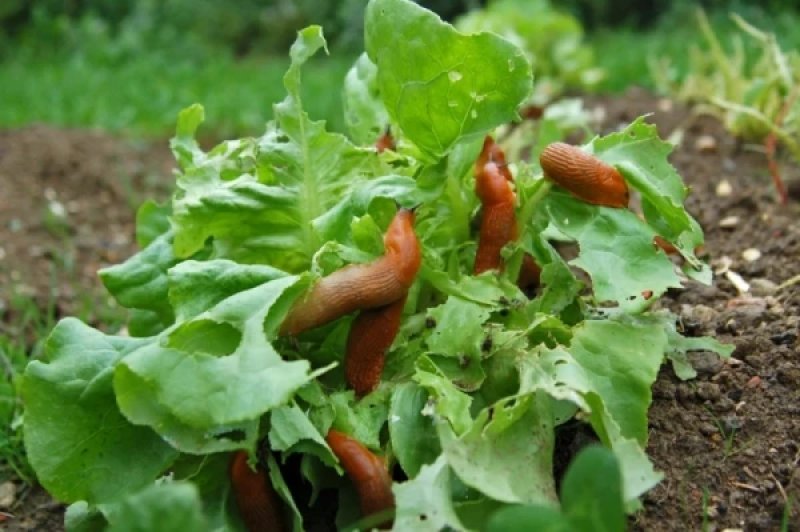
**Method 1. Hand Collection** Labor-intensive, but the most effective. Collecting pests should be done early in the morning or in the evening when they are most active, especially after rain. Gardener Andrey Tumanov even suggests acting at night. “If there is a potential hunter in your family, and no one gives him a gun, arm him with a flashlight and send him on a night hunt. You can detect slugs by the trails they leave behind. Once you track them down, the most interesting part begins. The fact is that slugs are big fans of their fallen brethren. So, you kill one, remember the spot, and leave for about 15 minutes. When you return after some time, you will see that these cannibals are already devouring their comrade—at least 5–10 of them. At this moment, you collect them into any container with a strong salt solution.” Important: be sure to wear gloves—slugs can be carriers of parasites. It is better to collect them with sticks or special tongs (tweezers). **Method 2. Moist Shelters** If hunting at night is not possible, set an ambush for the slugs. “Lay out wet rags, burdock leaves, old bags across the plot, and cover them with boards,” advises gardener Tatyana Svetlaya. “Slugs will hide under these shelters from the sun during the day. After sunset, simply lift the shelter and collect the pests.” A similar unusual trap works like this: take a grapefruit, cut it in half, scoop out the pulp, and place the peel cut-side down on the ground in areas where pests gather. Slugs and snails crawl under the “lid” of the peel, and in the evening, they can be easily collected along with the trap. **Method 3. Bait Traps** “Slugs are attracted to the hoppy aroma,” says biologist Maxim Petrov. “Therefore, traps with beer are effective. Bury small containers (cut bottles, cups) in the ground so that the edges are level with the soil. Pour dark beer, sweet juice, or a yeast and sugar solution about one-third full inside. The smell attracts slugs, they fall inside, and they cannot get back out. Baits need to be constantly refreshed, especially in hot weather.” **Method 4. Physical Barriers** Maxim Petrov also advises creating physical barriers around plants. These can be strips 10–15 centimeters wide made of wood ash, diatomaceous earth, crushed eggshells, fine gravel, shell grit, or pine needles. “Sharp particles and alkaline environments damage the mollusks' coverings and cause dehydration. After rain, the protective layer needs to be refreshed.” Most gardeners are used to watering their gardens at sunset to prevent the sun from burning the leaves and to allow moisture to nourish the roots overnight. For the Spanish slug in Latvia, this is the best gift. **Method 5. Electrochemical Barrier** Copper tape works well against slugs. When in contact with slime, copper undergoes an electrochemical reaction, causing unpleasant sensations for the mollusks. Use self-adhesive copper tape at least 5 centimeters wide: narrow strips are easily crossed by slugs. The tape should be secured around the perimeter of the beds, on the edges of boxes and pots. **Method 6. Infusions and Sprays** Pepper and mustard make a tough duo against slugs: capsaicin burns, mustard disorients—and pests avoid the beds (not all, but many). Chop 100 grams of fresh (or 50 grams of dried) pepper, pour it with a liter of warm water, let it steep for a day in the dark, strain, and add a teaspoon of household soap—it will help to fix the mixture. Spray the soil around the plants and the lower edges of the leaves: this is where slugs approach the plantings. Do this in the morning or evening without sunlight to avoid burning the greenery. The effect lasts 7–10 days; repeat after heavy rain. Mustard watering changes the environment. Dissolve a tablespoon of mustard powder in a liter of water, let it sit for 3–4 hours, and pour it around the perimeter of the beds and paths. Mustard makes the surface uncomfortable for crawling. It’s better to water in dry weather and no more than once a week to avoid disturbing the soil microflora. Important: work in gloves and goggles—the mixtures strongly irritate the skin and eyes. Store mixtures and infusions away from children and animals. Before mass treatment, test on 1–2 plants: if spots or curling appear within a day, reduce the concentration. **Method 7. Biological Methods** If you live in the countryside permanently and keep birds, pay attention to the main enemies of slugs—Indian runner ducks. “I focused on biological protection for my garden and haven’t regretted it,” says well-known gardening blogger Kristina Boyko. “One such duck can eat between 20 and 100 slugs a day. According to observations, 1–2 ducks per 100 square meters reduce the slug population by about 90% within a month. This breed has historically been raised in rice farms in Southeast Asia: they were specifically selected as field helpers due to their love for gastropods. Moreover, runners are notably disciplined: they diligently collect pests while hardly damaging the beds. In comparison, Khaki Campbell ducks also handle slugs well, but they tend to create more mess in the area—digging up the soil and trampling the plantings. Chickens also work well alongside ducks: when free-ranging, they actively eat not only slugs but also May beetle larvae, caterpillars, Colorado beetles, mites, aphids, and flies.” **Method 8. Plant Repellents** “Plant alongside cultivated crops plants that repel slugs: garlic, onion, rosemary, sage, thyme, lavender, wormwood, parsley, dill,” recommends agronomist Lyudmila Voinkova. “This method works due to the pronounced aroma and specific compounds that these crops emit: essential oils and phytoncides create an uncomfortable environment for slugs, masking the smell of vegetables that attract them and complicating their scent orientation.” **Prevention** To avoid creating a large problem, it is important not only to fight existing pests but also to avoid creating favorable conditions for them. Many of the tips may seem trivial, but often gardeners forget the most elementary preventive measures. - Reduce humidity. Regularly loosen the soil so that it dries faster. Thin out plantings—this reduces the number of shelters and improves ventilation. - Remove shelters. Do not leave boards, stones, piles of leaves, or weeds in the area—mollusks hide under them during the day. Timely cleaning reduces not only the number of pests but also the risk of soil and crop contamination by unwanted microorganisms. - Practice crop rotation. Do not grow crops, especially those attractive to pests (cabbage, lettuce, strawberries), in the same place too often.