

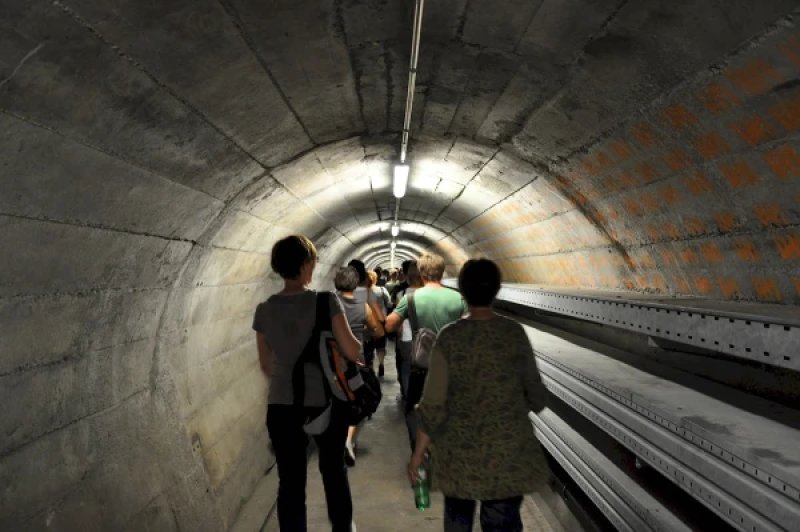
The government plans to make the construction of shelters in Latvia faster and more unified. According to a report prepared by the Ministry of the Interior, the Ministry of Economics, in collaboration with the State Fire and Rescue Service, will develop a standard technical specification for shelters by October. The document is expected to define optimal requirements for the industrial production, supply, and installation of such structures. The next step will be to analyze the existing building regulations. By December, the Ministry of Economics, together with the Ministry of Smart Governance and Regional Development, will assess whether changes to the territorial planning rules are necessary. This concerns situations where it is impossible to build a standalone shelter due to existing restrictions set by local development plans. In such cases, authorities may provide for the possibility of deviating from certain requirements. This means that in the future, constructing shelters in already established urban areas may become easier. This approach is expected to reduce administrative barriers and expedite the emergence of new civil protection facilities. Additionally, the government intends to instruct the responsible ministries to begin developing a standard project for a standalone shelter that can be used in various locations without the need to create a project from scratch each time. The report notes that the market for such structures is actively developing. Ready-made modular shelters of industrial production that meet NATO’s unified standards are already being manufactured. In terms of protection levels, they exceed the requirements currently imposed in Latvia for shelters of the second and third categories. These shelters consist of ready-made reinforced concrete or composite modules that can be quickly installed underground or within buildings. They are equipped with ventilation systems, air filtration, and ballistic protection and are intended for use in the civil defense system. According to the authors of the report, the use of standard modular solutions will allow for faster and more efficient construction of shelters than traditional building technologies.