

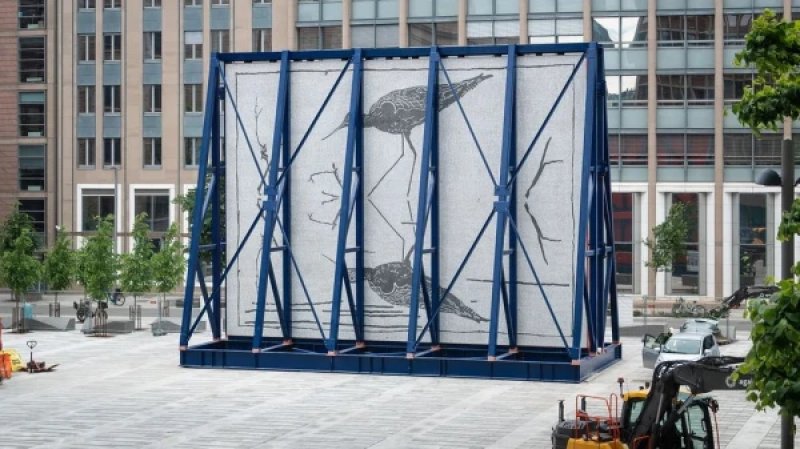
Today, the official opening of the National Memorial July 22 will take place in the capital of Norway, dedicated to the memory of the victims of the attacks carried out in 2011 by right-wing extremist Anders Breivik, [reports](https://nos.nl/artikel/2623612-noorwegen-opent-15-jaar-na-aanslagen-breivik-nationaal-monument) NOS. Exactly fifteen years ago, the terrorist detonated a bomb in the government quarter of Oslo, killing eight people. He then traveled to the island of Utøya, where he opened fire on participants of a youth camp organized by the Labour Party. The attack claimed another 69 lives, most of whom were teenagers. The memorial is located in the renovated government quarter of Oslo, near the site of the explosion. The complex, which was severely damaged as a result of the attack, was only reopened for government use in April of this year. ### A Long Journey to the Memorial The creation of the national monument took almost a decade and a half. Several architectural competitions were canceled, and the project was accompanied by legal disputes and public controversies. "It was a too painful topic, so the process was prolonged," said Norwegian artist Matthias Faldbakken, the author of the project **Upholding**. ### A Symbol of Memory and Unity The memorial connects the two sites of tragedy — Oslo and the island of Utøya. The steel structure symbolizes the capital, while the embedded mosaic serves as a reminder of the island where the mass shooting occurred. The names of all 77 victims are engraved on the metal elements. The mosaic consists of approximately 300,000 stones and depicts a small marsh bird that inhabits the area near Utøya. According to the author, this image best conveys the fragility of human life.  _Merete Stamneshagen, whose daughter died during the attack on Utøya, lays the last stone in the memorial mosaic. Niklas Hart / KORO_ In recent weeks, about two thousand people, including relatives of the victims and survivors, participated in completing the memorial by personally placing stones in the mosaic. ### Not Just a Place of Remembrance According to Faldbakken, the memorial was conceived not only as a place of mourning. > "For me, it is also a kind of bastion against similar attacks in the future," the artist noted. The opening ceremony was attended by Crown Prince Haakon, government members, relatives of the victims, and survivors. Norwegian Prime Minister Jonas Gahr Støre expressed hope that the memorial would become a place of remembrance, reflection, and education for future generations. The new memorial aims to preserve the memory of the 77 victims of the tragedy on July 22, 2011, and to remind of the cost of hatred and extremism. In Norway, it is emphasized that the main point of this story is to remember not the name of the criminal, but the people whose lives were cut short and the values of democracy they symbolized.