

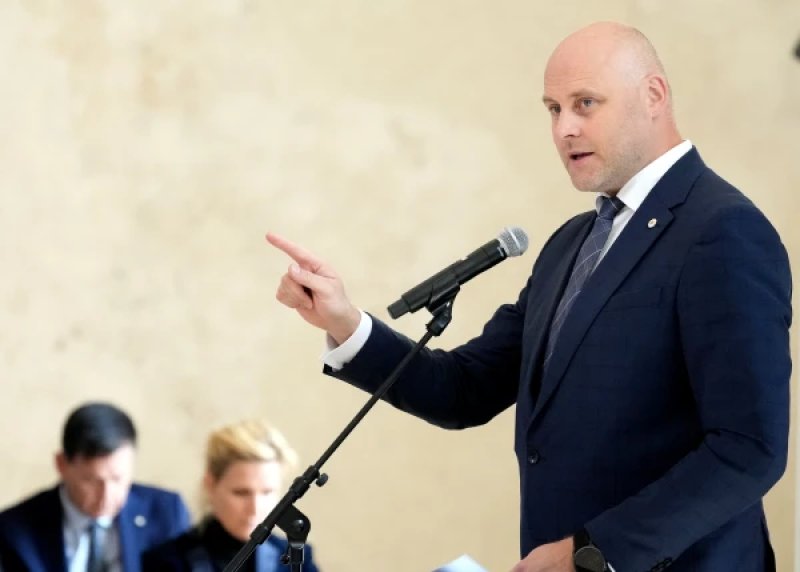
In an interview with Latvian Radio, the head of government emphasized that he never suggested completely halting funding for the non-governmental sector. However, in his opinion, the state should better understand how approximately 200 million euros allocated to NGOs are spent. "I have no idea what this money is spent on," Kulbergs stated. The Prime Minister also believes that the current system of compensating NGO representatives for their participation in the Council for the Implementation of the Memorandum of Cooperation between the Cabinet of Ministers and non-governmental organizations needs to be revised. In his view, the practice of paying rewards for participation in meetings has outlived its usefulness. At the same time, Kulbergs acknowledged that many non-governmental organizations effectively perform functions delegated by the state. In such cases, he believes that funding should be provided on a competitive basis. In fact, the Prime Minister proposes to separate support for public initiatives from the payment for specific state services that NGOs perform on behalf of the state. As an example, Kulbergs cited his experience as the head of the Auto asociācija. According to him, the association did not receive state funding, although it represents the interests of the automotive industry. The Prime Minister's statements previously provoked a sharp reaction from representatives of the non-governmental sector. The Director of the Latvian Platform for Development Cooperation (LAPAS), Inese Vaivare, stated that such statements undermine public trust in civil organizations. In her opinion, the ongoing discussion around NGOs resembles an information campaign aimed at weakening civil society. Thus, the dispute between the government and the non-governmental sector continues. In the near future, one of the main topics of discussion is likely to remain the question of how to make the use of state funding more transparent without diminishing the role of NGOs in addressing socially significant tasks.
