

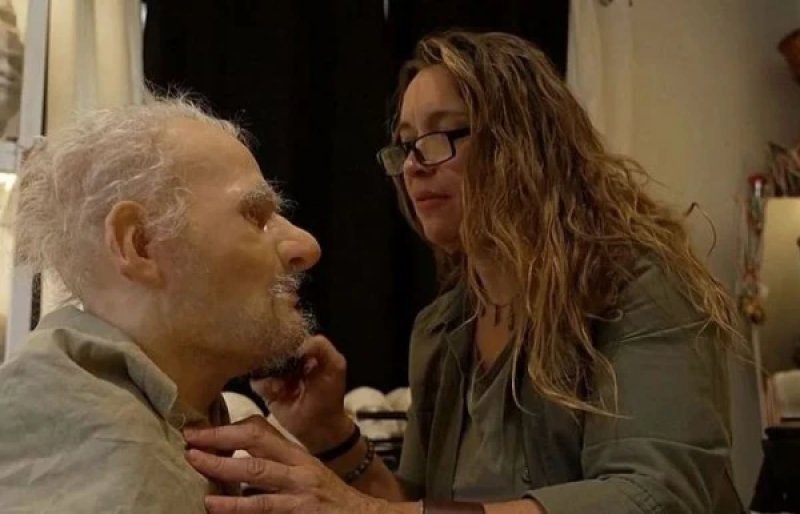
A unique exhibition dedicated to the inhabitants of the ancient Roman era has been presented in Budapest. Instead of the familiar marble busts of famous rulers, visitors are greeted by realistic images of ordinary people — a blacksmith, a soldier, a stableman, a slave woman, and other residents of a Roman settlement on the banks of the Danube. The project is the result of a collaboration between anthropologists, geneticists, and reconstruction artists. The basis for restoring the appearance was human remains discovered during archaeological excavations in modern-day Budapest. Thanks to DNA research, specialists were able to determine not only the sex and origin of the ancient inhabitants but also features of their appearance — skin, eye, and hair color, as well as individual traits, including the presence of freckles. In total, scientists reconstructed the appearance of sixteen individuals. Six of them are presented as life-size silicone figures. Each sculpture is handmade: the artisans carefully crafted the texture of the skin, manually attached the hair, and selected clothing and accessories appropriate to the era. The creators of the exhibition believe that real three-dimensional figures make a much stronger impression than digital images or reconstructions created using artificial intelligence. In their opinion, it is the personal encounter with a "person from the past" that helps to feel the connection between eras. The authors of the project aimed to return not only the face but also the life story to each character. Based on the study of skeletal remains, specialists identified the characteristics of their professions, injuries sustained, and lifestyles. For instance, one of the exhibition's characters — a worker named Respectus — spent many years engaged in heavy physical labor, as evidenced by changes in his skeleton. Researchers also determined that during his lifetime, he suffered a broken nose and lost a tooth, likely during a fight. The organizers are confident that such details help to view history differently and remind us that people who lived nearly two thousand years ago experienced the same emotions, worked, suffered, and faced everyday challenges just like modern individuals. ...The exhibition will be open in Budapest until October 31. Its main idea is to show that behind the pages of history stand not only great commanders and emperors but also the most ordinary people, whose fates have been restored today thanks to the achievements of modern science.
