

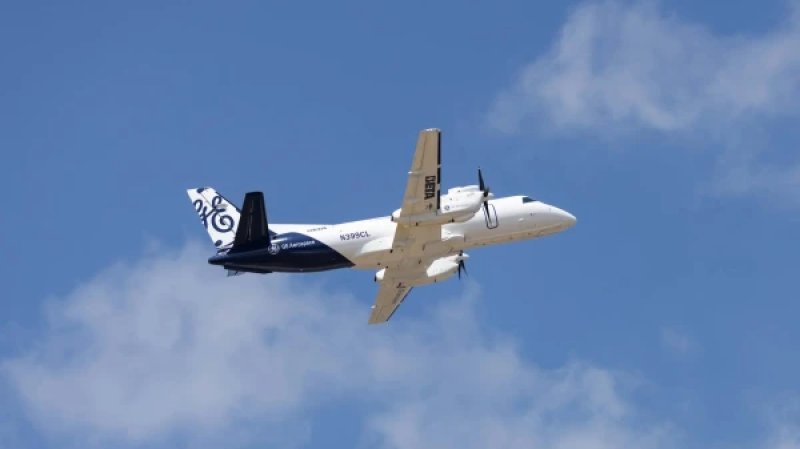
NASA, in collaboration with GE Aerospace, presented the results of years of development of a hybrid-electric aviation powerplant. The megawatt-class engine successfully completed a demonstration flight on the Saab 340B aircraft and was publicly showcased for the first time at the Farnborough International Air Show in the UK. Even before the official presentation, the system achieved a significant milestone, becoming the first hybrid-electric powerplant to lift an aircraft to an altitude of over 30,000 feet (about 9,100 meters). As noted by Lori Grindl, director of the aviation division at NASA's Office of Research and Technology, this project demonstrates how fundamental research transforms into real technologies. "We explore bold ideas, validate them through rigorous research and testing, and then, together with industry, turn revolutionary developments into technologies that provide real benefits to society," she said. The new powerplant combines a gas turbine engine, electric motors, and an energy storage system. It is designed for aircraft the size of regional passenger liners and aims to help reduce fuel consumption and operating costs without compromising flight performance. While fully electric engines are already used in small aircraft and drones, their power is currently insufficient for large passenger airplanes. This is why the hybrid scheme, in which a traditional engine works alongside an electric system, is considered one of the most promising directions for aviation development today. The project took more than fifteen years to develop. According to Ralph Jansen, an engineer at NASA's Glenn Research Center, such developments seemed almost unattainable not long ago. "This is the result of more than fifteen years of work. We pursued this because such technologies will help reduce energy consumption in aviation and benefit companies and society," he noted. Over the years of research, specialists tackled several complex engineering challenges: increasing the power of the electric system, developing new cooling methods, improving batteries, and achieving effective collaboration between electric motors and the gas turbine. One of the key stages was testing on the Electric Aircraft Testbed at the Neil Armstrong Research Center in Ohio. In 2022, engineers simulated flight conditions at altitudes up to 45,000 feet (about 13,700 meters), corresponding to the operating altitudes of modern passenger aircraft. After that, the powerplant was supplemented with electric motors, energy converters, propellers, and a production aviation engine from GE Aerospace. This was followed by new ground tests and flight trials. According to Jansen, the most exciting moment was witnessing how the aircraft with the new engine behaved in the air almost like a conventional passenger liner. "It was amazing to watch it in flight. And the most surprising thing is that the aircraft flies just like a regular one, which is probably the best result we could achieve," said the engineer. The project resulted from the collaborative efforts of hundreds of specialists from NASA, GE Aerospace, and other companies. The agency continues to research hybrid aviation, hoping that the technologies developed will help create more economical and environmentally friendly next-generation passenger aircraft. Tests have shown that hybrid-electric engines are gradually moving from the category of experimental developments to technologies that could change civil aviation in the future.