

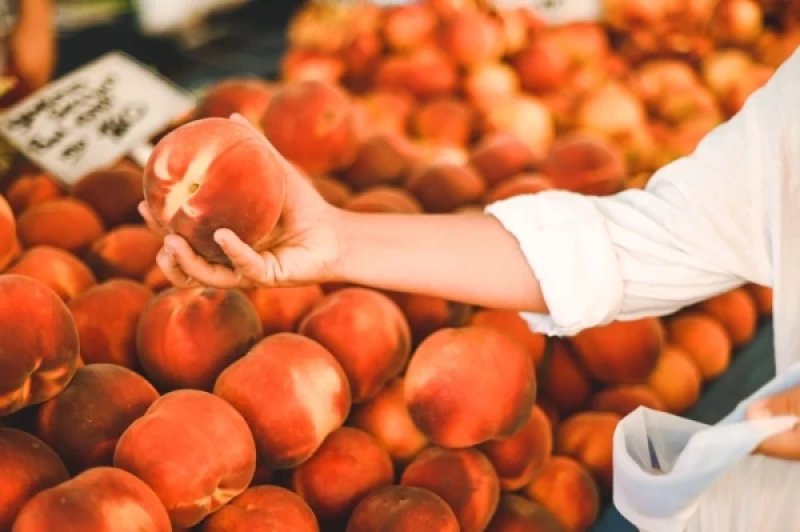
Born in the USSR, people only knew peaches and apricots from these fruits. So where did flat peaches, regular ones, and small Uzbek nectarines come from? **Common Peach and Its Mutants** In fact, all these fruits belong to the same biological species — common peach (Prunus persica). They are simply its mutants. Even the small Uzbek nectarine is a mutant of the peach, not a close relative in size, the apricot. It is important to note that genetic engineering has nothing to do with the origin of these fruits. They appeared as a result of natural mutations that were later fixed by breeders. For example, nectarines arose due to a mutation that led to the breakdown of the gene responsible for the growth of microscopic hairs on peaches — the fuzz or scientifically, trichomes. Thus, any nectarines, including large red ones and small pale Uzbek ones, carry the same copied natural error in their DNA. The difference in their size, sweetness, skin color, and flesh is determined by other genes that were selected by breeders later. The flat peach is called fig peach for its special sweetness, but it contains no fig genes. It became this way due to a mutation in a specific gene that determines the shape of the fruit. By the way, there is also a flat nectarine — it has an additional mutation that makes its skin smooth. It is also available for sale, but less frequently. The apricot, on the other hand, is a different species; it is a "cousin" of the common peach, and it also has its own mutants. Among them, there are no "hairless" ones, but there are flat and black apricots. However, they have not gained wide distribution in sales. **Which of the "peach" Varieties is the Most Beneficial?** Besides appearance and taste, all these fruits differ in their nutritional properties. They contain varying amounts of beneficial substances and harmful sugars. This is significant for people with various diseases, as well as for those who want to lose weight or strive to lead a healthy lifestyle. In terms of sugars, regular peaches and apricots have the least, while flat peaches have the most, and they are also the sweetest. This means that they should be chosen last when dealing with diabetes or weight issues. Secondly, those with these diagnoses should avoid nectarines, especially the Uzbek ones. However, it cannot be said that these mutants are harmful; many important polyphenolic antioxidants are even more abundant in them than in classic peaches or apricots. Considering that they slow down the aging of our bodies and the development of all age-related diseases — from cardiovascular issues to cancer, nectarines and fig peaches are also good, especially for healthy individuals with normal weight. Yet, in terms of dietary fiber, vitamins C and A, and carotenoids, all mutants again fall short compared to regular peaches and apricots. The latter are champions in potassium content — which is extremely beneficial for hypertension and other cardiovascular pathologies. For such patients, all "red-skinned peaches" are also very beneficial, as their color is due to anthocyanins and polyphenols that are good for blood vessels. Additionally, the apricot, being a champion in carotenoids, is very good for eye and skin health.