

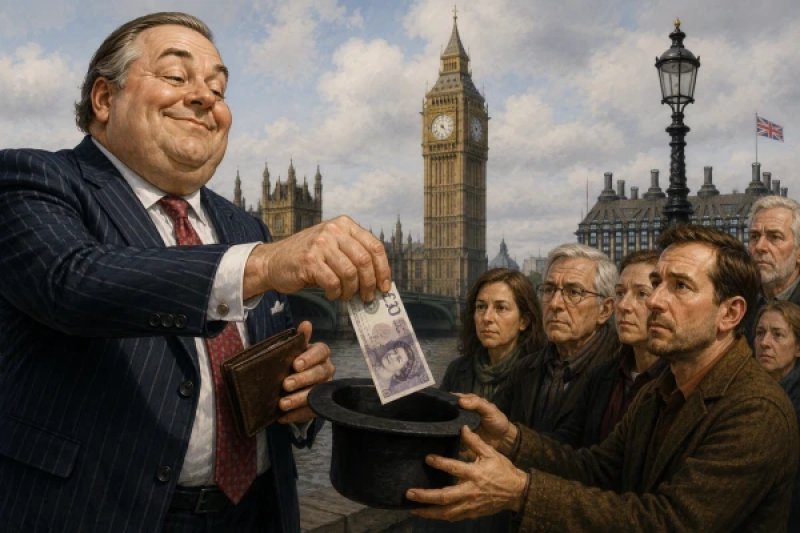
120 British millionaires have approached Prime Minister Andy Burnham with an unexpected request — to increase taxes for the wealthiest. They assure that they are willing to pay more to reduce social inequality, although critics warn that such a reform could lead to capital flight from the country, [reports](https://nos.nl/artikel/2624296-proud-to-pay-120-britse-miljonairs-bereid-om-meer-belasting-te-betalen) NOS. A group of 120 wealthy Britons, calling themselves Patriotic Millionaires, published an open letter urging the introduction of a tax on large fortunes. Among the signatories are former footballer and television presenter Gary Lineker, as well as director and screenwriter Richard Curtis. The authors of the initiative propose to levy 2% annually on fortunes exceeding £10 million. According to their calculations, this measure could bring about £24 billion to the budget each year. Currently, there is no general annual wealth tax in the UK. ### “We Can Afford It” The millionaires titled their appeal Proud to Pay. > “We want you to tax us at higher rates. We can afford it,” the letter states. According to the authors, this is not about people earning through their labor, but about owners of vast fortunes who primarily live off accumulated wealth. > “For too long, money and power have been concentrated in the hands of a small group of people. This harms our country, society, democracy, and the environment,” the initiators of the appeal believe. According to a study by the organization itself, about **75% of British millionaires** support tax increases for the ultra-wealthy. A recent YouGov poll showed a similar result: three-quarters of the country's residents support the introduction of a wealth tax, while only 13% of respondents were against it. ### The Government Is Considering the Idea The appeal came during the first working week of new Prime Minister Andy Burnham. He previously stated that his government is considering the possibility of introducing a tax on large fortunes. However, experts remind that implementing such a system will not be easy. Authorities will first need to create a mechanism for assessing all the assets of wealthy citizens — from real estate and stocks to works of art and other assets. Currently, there is no such unified registry in the country. ### There Are Risks Opponents of the reform warn that new taxes could push wealthy Britons to transfer assets abroad or register property in the names of relatives. Back in 2020, the British Wealth Tax Commission concluded that a one-time tax is significantly easier to implement than an annual one. The Institute for Fiscal Studies shares a similar position, believing that a permanent wealth tax could slow economic growth, reduce investments, and accelerate capital flight to jurisdictions like Dubai, Monaco, or Switzerland. Attempts to introduce such a tax have been made before. In the 1970s, Labour government Finance Minister Denis Healey explored this possibility, but after a few years, he abandoned the idea, citing excessive administrative costs and political resistance. ### Inequality Remains a Major Issue Interest in such an initiative is largely explained by the high level of wealth inequality in the UK. According to the World Inequality Lab, **the top 1% of British citizens owns about 22–23% of the country's personal wealth**. Many residents also believe that their standard of living has hardly improved over the past 10–15 years. The reasons cited include weak economic growth, high inflation, rising energy costs, and the consequences of years of austerity policies. Against this backdrop, the idea of making the ultra-wealthy pay more enjoys significant public support. While the proposal remains a topic of discussion, the very fact that the initiators of tax increases are representatives of the British financial elite has already attracted considerable attention. Now the government must decide whether such an unusual initiative can turn into real tax reform without harming the country's economy.
