

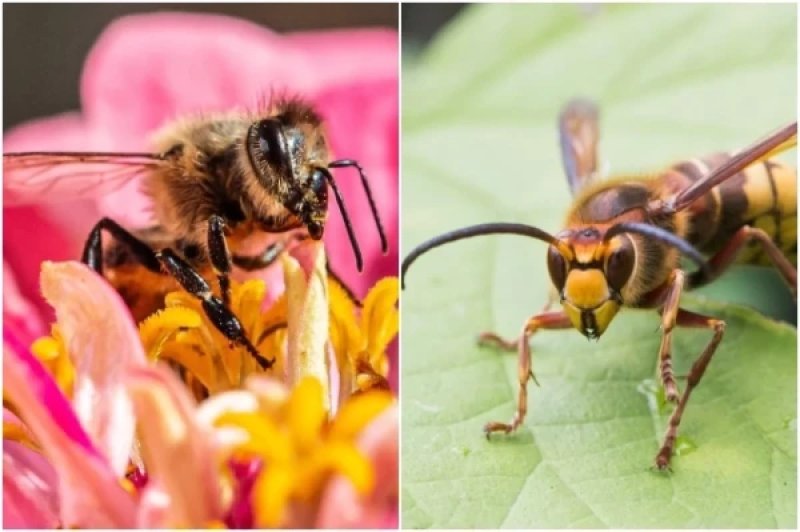
Entomologist Alexey Gaivas explained what to really be afraid of in the forest and at the dacha, and which stories are just urban legends. **They won’t attack for no reason** Many have heard terrifying tales: that a hornet crashes into a horse and it falls dead. Such stories are passed from mouth to mouth, sometimes even from grandfather to grandson. But, as the specialist assures, there is almost no truth in this story. "When people say that a hornet crashed into a horse and it fell dead — that is actually not true. The thing is, stinging insects do not attack for no reason. Their sting is a means of defense, not an attack. And, importantly, no stinging insect can sting anyone while flying: to sting, it must bend its abdomen and strike 'from underneath.' No wasp can do that," explains Alexey Gaivas. Wasps and hornets have smooth stings, like a thin needle, so a wasp can sting multiple times in a row. Each sting injects a new dose of venom, albeit in gradually decreasing concentration. A hornet is essentially a large wasp (sometimes referred to as a forest wasp), and it has more venom. "The venom content in a hornet is several times greater than that of a regular wasp. Hence the greater danger. There are also tales that two hornet stings can be fatal, but I seriously doubt anyone has actually conducted such experiments. The real threat is an allergic reaction. It is this that can lead to severe consequences, including death," emphasizes Alexey Gaivas. Another important point: if you have already been stung once or twice, do not linger near the nest. Insects tend to 'mark' their victim, and subsequent stings will aim for roughly the same area. To avoid being attacked by a whole swarm, it is advisable to leave the area immediately where you were stung and not tempt fate. Particular caution should be exercised in spring and summer in places where nests may be located. For example, in the forest, while picking berries or mushrooms, one might accidentally stumble upon ground burrows — wasps often settle there. "I always tell my students: if you hear buzzing in the forest and see a hole in the ground, do not stick your fingers in there under any circumstances. It could cost you several painful stings," warns the entomologist. **Bee Sting — Beneficial** A bee's sting is serrated, like a small sickle. When it stings, the sting gets stuck in the skin along with a venom sac — and the bee dies, losing part of its abdomen. A common human reaction is to swat and crush the offender, but this only worsens the situation. "The sting has already made a hole. If you act calmly, you can carefully remove the sting with tweezers — it will just hurt at the puncture site. But if you start hitting that spot, you will crush the sac, and all the venom will instantly enter the wound. The principle is simple, but it is often violated," notes the entomologist. By the way, bee venom is even used in medicine under certain conditions — for example, to thin the blood. But this is only permissible in the absence of allergies and strictly under a doctor's prescription. "Bee venom thins the blood — this is relevant considering how often people experience thrombosis. But you must first ensure that you do not have an allergy. I have personally seen cases where one sting caused the upper lip to swell above the nose — that is already anaphylactic shock. In such situations, every second counts," the expert explains. **What to Do If Stung by a Wasp?** What should you do if a sting does happen? The main rule for everyone, even if you are sure you are not allergic, is to keep an antihistamine handy. At the dacha, on a hike, in the car — it should always be available. "Regardless of whether you know about your allergy or not, there should always be some antihistamine on hand. In the past, when stung by bees, people were given water with honey — supposedly this stabilized the condition. But today, it’s better not to rely on folk remedies: in case of a severe reaction, modern medications should be taken immediately, and an ambulance should be called," advises Alexey Gaivas. So the main safety secret is simple: do not make sudden movements, do not try to kill the insect on yourself, and do not disturb the nests. And if you know about your tendency to allergies — never leave home without your medication.