

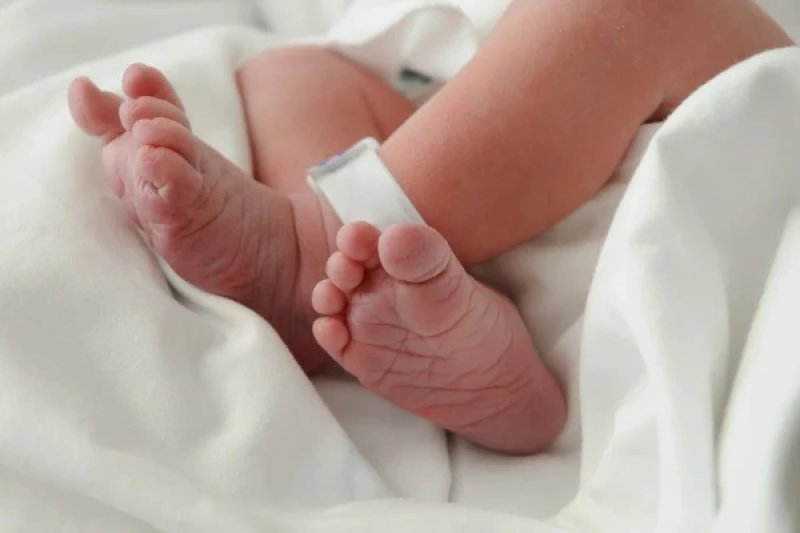
“You have an hour to say goodbye to your baby,” these words 34-year-old Australian Clarissa Mansbridge heard right after her first childbirth. The doctors were sure that saving the baby was impossible. The tragedy occurred at 33 weeks of pregnancy. Due to a premature placental abruption, the woman underwent an emergency cesarean section. However, when the doctors extracted the baby, his heart was no longer beating. It was only after **26 minutes of continuous resuscitation** that the medical team managed to restore the heartbeat. But the trials for the family were just beginning. > “The doctor said that all the organs of the baby had failed, that he needed an MRI, but most likely, the examination would show complete brain death,” recalls Clarissa. Then followed a torturous 45 minutes of waiting for the examination results — a time when every minute felt like an eternity. When the mother was finally allowed to hold her son, something unexpected happened. > “He suddenly lifted his head and looked me straight in the eyes. I saw light in his eyes. That’s when I realized that I had to fight for him until the end,” the woman recounts. The results of the MRI surprised even the doctors. The brain damage turned out to be significantly less than they had expected. However, the diagnosis was still extremely severe — hypoxic-ischemic encephalopathy, meaning serious brain damage caused by prolonged oxygen deprivation during birth. According to Clarissa, the doctors honestly warned her that the baby could die at any moment. Even if he survived, he would likely never be able to walk, sit, talk, or stand on his own, and he would require care for his entire life. But the baby, whom the parents named William, continued to fight. After several weeks in intensive care, he showed the first signs of improvement. The baby was then transferred to the intensive care unit. Despite the positive dynamics, the mother continued to live in constant fear. > “At night, I would receive calls from the hospital informing me that he was having another seizure, that his oxygen levels and heart rate had dropped sharply. Once, I was even told that we had lost him and would not be able to bring him back,” Clarissa told *The Daily Mirror*. Such seizures repeated over and over again. Later, William was transferred to a specialized children’s hospital. There was another unexpected change: the seizures completely stopped. Two months after the baby’s birth, he was discharged home. But even after that, Clarissa, raising her son alone, struggled to shake off her fear. > “I constantly opened the baby monitor, zooming in to make sure he was breathing,” she admits. Today, three years have passed since those dramatic events. Against all doctors' predictions, William not only survived but is developing almost like his peers. He walks, runs, talks, loves playing with dinosaurs and construction vehicles. The boy still has some hearing issues, but they are successfully manageable. “My child amazes me every day. I am incredibly lucky,” says Clarissa.