

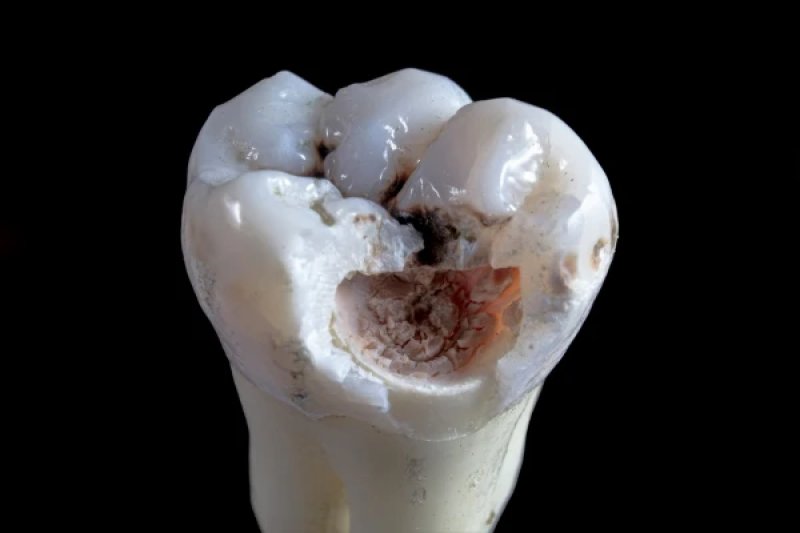
American scientists have presented compelling evidence of the effectiveness of Silver Diamine Fluoride (SDF) — an inexpensive liquid treatment that can stop the progression of cavities in just a few seconds and without the use of a drill. The results of a large-scale Phase III clinical trial were published in the journal [JAMA Pediatrics](https://jamanetwork.com/journals/jamapediatrics/fullarticle/2851913). The trials involved 830 children under the age of six from several states in the U.S. The study showed that applying a 38% solution of SDF once every six months was able to halt the progression of cavities in more than half of the affected primary teeth. Unlike traditional treatment, where a dentist removes damaged tissue and places a filling, the new method is significantly simpler. The doctor simply applies the solution to the cavity using a small applicator. The procedure takes only a few seconds and requires no drilling, injections, or sedation. "This is a very effective and safe treatment — even for children as young as one year old," noted the lead researcher, Professor of Dentistry at the University of Michigan, Margerita Fontana. SDF has been used in various countries around the world for several decades. In the U.S., dentists have been using it since 2014, but until now, the solution has only been officially registered for reducing tooth sensitivity, not for treating cavities. According to the researchers, the new data could serve as a basis for the U.S. Food and Drug Administration (FDA) to officially approve this method specifically for treating cavities. The treatment could be particularly beneficial for young children, elderly people, patients with disabilities, as well as those who fear dental treatment or have limited access to dental care. However, the method does have a significant drawback: after treatment, the affected area of the tooth darkens irreversibly. The silver stains the decayed part of the tooth black, which is why the method is more often used where preserving the tooth and avoiding pain is more important than achieving an ideal appearance. Researchers believe that broader use of SDF could prevent the development of complications and reduce the number of cases where young children need to have their teeth treated under general anesthesia. "Practically anyone can use this method to stop the progression of cavities, eliminate infection, and relieve pain. It can benefit many people," emphasized Margerita Fontana. The authors of the study believe that the confirmed effectiveness of SDF could change the approach to treating cavities, especially in young children, making assistance faster, more accessible, and less traumatic.