

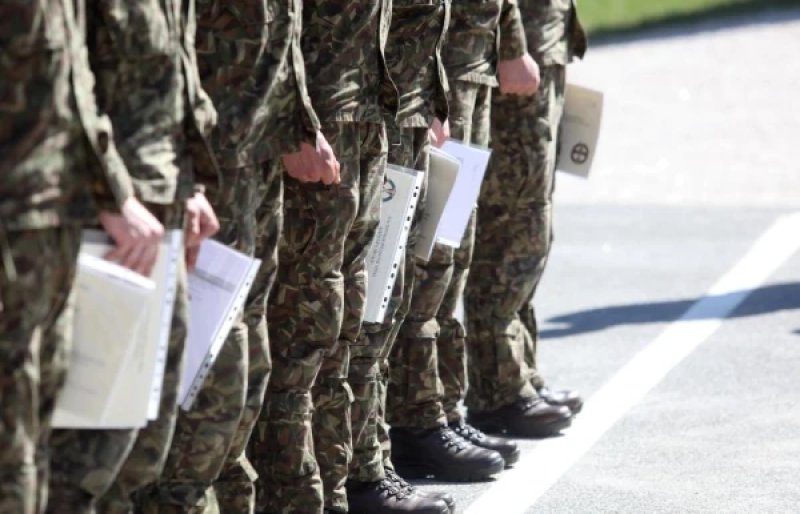
Inese Skui's post on social media sparked a large-scale discussion about the possible conscription of young Latvian citizens who grew up outside the country for mandatory military service. According to the author of the publication, many families left Latvia not by choice, but because they could not build a decent life here. "For years, Latvia watched as many of its residents left because they could not afford to stay or build a normal life here. Instead of asking why people left and actually changing something, our politicians seemed more interested in lining their own pockets," she wrote. In Skui's opinion, the state has only now remembered the children of emigrants because it needs people for military service. "And now, when they need more people for military service, they suddenly remembered the children of the diaspora." She emphasized that these are young people who grew up in other countries, have jobs, studies, friends there, and have already built their own lives. "You cannot first ignore people when they leave and then claim rights to their future when it becomes convenient." The author also noted that she respects supporters of mandatory service, but she herself cannot support the idea of forcing young people living abroad to "put their lives on hold because of decisions made by a government that has done so little to make them want to stay." ## ## "Latvia was not there for us" Many commentators supported the author's position and shared their own emigration stories. For instance, user Anda Moore recalled that she left Latvia when she was a single mother raising two small children. "My own country denied me any support when I was a single mother." According to her, employers refused to hire her, fearing that she would have to take care of sick children. As a result, the family moved abroad, where the woman took any job - ironing clothes, washing windows, cleaning houses, and caring for children and animals. Now her son is already an adult, and although she herself does not mind military service, she is disappointed with the state's attitude. "You cannot ask my children to be there for you when you were not there for us in the hardest times." A similar position was expressed by Deniel Strenadjko. "Honestly, I do not feel that Latvia is my country. I was born there, but I no longer feel that connection, so I would not return to participate in a war." Olga Petrova pointed out that many children of emigrants have actually grown up in other countries. "They want to conscript children who do not know the language, the area, and the mentality. They did not pay them child benefits and did not provide them with healthcare. Their homeland is not Latvia; their Latvian citizenship is only due to their parents. This is a way to lose a lot of young citizens." Another participant in the discussion shared that her son was born abroad and has been to Latvia only a few times. "He begs to renounce his Latvian citizenship because this country is foreign to him." ## ## "Citizenship is not just rights" However, many participants in the discussion took the opposite position. Ernie Einemann wrote: "If you have a passport of this country and military service is mandatory, then you must serve." A similar opinion is held by Karlis Zelinskis: "It’s simple - if you are a citizen of Latvia, you get both the good and the bad along with citizenship. You cannot choose only the benefits you like." Aivils Bunka expressed himself even more harshly: "Then change your passport. Why do you still want to be Latvians if you are against Latvia?" Inga Cerbule reminded that mandatory military service exists in many European countries: "In nine EU countries, mandatory military service is in effect. In most of them, service is required regardless of whether you live in the country or not." ## ## "Latvia needs to take its own defense more seriously" A separate viewpoint was expressed by Boris Trnavskis, a native of Riga who made a military career in Canada after emigrating. In his opinion, citizenship inevitably implies obligations. "Citizenship implies both expectations and obligations. If the leadership of your country decides on mandatory military service, you either fulfill your duty as a citizen or renounce your citizenship." He also reminded that Latvia is next to "aggressive Russia, controlled by Putin," so the country needs to take its own defense more seriously. Another participant in the discussion believes that many emigrants left the country not due to poverty, but because they had the opportunity to move to wealthier states in Europe: "What happened to you is an opportunity, not a catastrophe." He shared that he personally participated in reserve training with people who have long lived abroad. "It later turned out that the state even compensated them for expenses if they kept the receipts."