

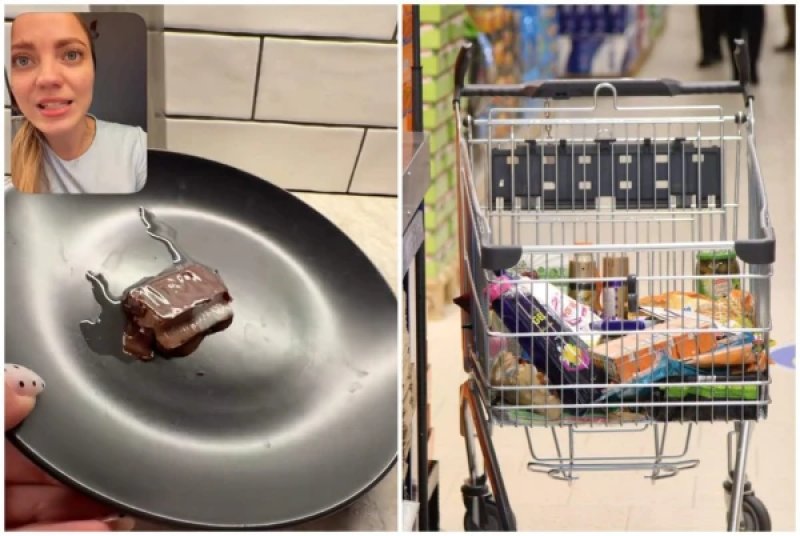
"Karlsons doesn’t melt," writes the video’s author, showing a small piece on a plate. The recording quickly sparked a discussion — some commentators express outrage and urge others to read the product's ingredients more carefully, while others point out that this product is not actually classic ice cream by nature. "Check the ingredients. This is not ice cream," writes one commentator. Another woman adds that they also conducted a similar experiment at home and after that started reading product labels much more carefully: "It’s awful what the ingredients are in sweets and not just sweets." The comments also include irony. Someone writes: "This is not ice cream," while another adds: "There are other types of ice cream that don’t melt." Yet another commentator concludes that "Karlsons has become very cheap and very tasteless." However, there are also those who believe that the situation is being exaggerated. They explain that frozen desserts with glazing, fats, and stabilizers do not always melt at room temperature in the same way as, for example, ice cream or fruit sorbet. One commentator writes in English that the problem is not with the additives themselves — for example, glycerides are essentially a type of fat, guar gum is derived from beans, and calcium sulfate is used in other products as well. In his opinion, claims that the sweet is "toxic" simply because it retains its shape longer are an exaggeration. Other commentators also point out that chocolate glazing, fats, and the structure of the filling can affect how the product behaves in heat. "What do you think it should be like? Show how this type of chocolate-glazed ice cream should melt!" asks one participant in the discussion. In recent years, in many mass-produced products, "ice cream" is increasingly no longer just milk, cream, sugar, and eggs. In stores, alongside classic dairy ice cream, there are many frozen desserts where part of the milk fat is replaced with vegetable fats, and stabilizers, emulsifiers, thickeners, glazing, and various fillings are added. This is why the impression arises: "Why doesn’t it melt like it used to?" In fact, it usually melts, but not always into a liquid puddle. Some products retain their shape in heat, becoming soft, sticky, or foamy, but do not break down immediately. The recipe influences this.