

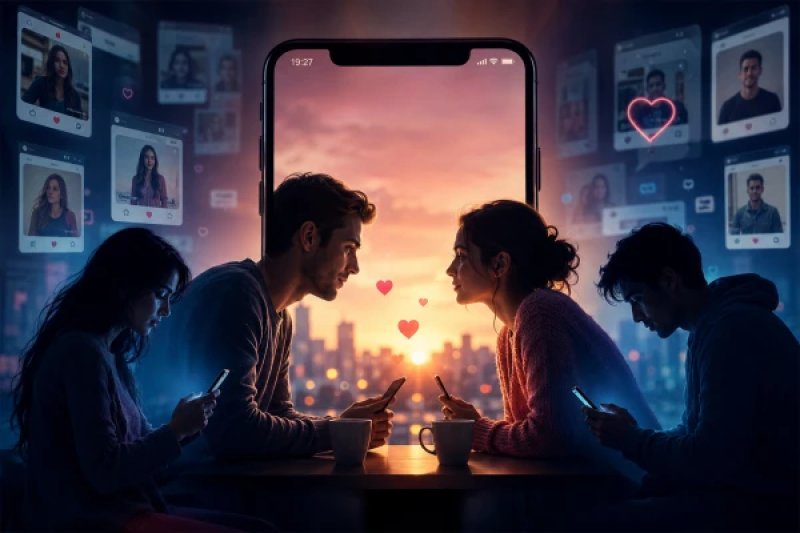
## We Have Learned to Find Each Other, but Have We Become Closer? Just a few decades ago, relationships developed quite differently. People waited for phone calls, wrote letters, arranged meetings in advance, and sometimes went weeks without knowing how the person they liked was doing. There was space for expectation, fantasy, and gradual discovery between two people. Today, that space has almost disappeared. Even before the first date, one can find out what a person looks like without filters, where they vacationed last summer, what movies they like, what they think about politics, what music they listen to, and who they spend their weekends with. On one hand, this makes getting to know someone easier. On the other hand, it leaves much less room for mystery. After all, romance has always been born not only from closeness but also from the unknown. ## Constant Connection Does Not Always Mean True Closeness Modern technology allows us to be in touch almost around the clock. One can send a message at any moment, see when someone was online, check out new photos, or find out whom they liked. It creates a sense of constant presence. But presence is not the same as closeness. Today, many can chat for weeks or even months, exchanging messages, memes, and photos daily, yet never move on to a conversation that truly helps them get to know each other. Digital communication often creates a sense of a relationship, even though a real emotional connection never develops. ## When Choice Becomes Too Abundant One of the most noticeable features of the digital age is the feeling of endless choice. Whereas once a meeting was seen as a chance to get to know a specific person, today there is always the thought that behind the next swipe could be someone even more interesting, attractive, or "ideal." At first glance, this seems like freedom. But psychologists have long noted that the more options there are, the harder it is to make a decision, and the less satisfaction one derives from the choice made. A similar mechanism works in relationships. Instead of getting to know a person more deeply, many continue to compare them to an endless number of potential alternatives. ## Social Media Has Changed Our Expectations Every day we see beautiful photos of happy couples, romantic trips, luxurious dates, and declarations of love. But we almost never see arguments, fatigue, everyday problems, and crises that almost all relationships go through. Because of this, real relationships begin to lose out to the ideal picture. We become less tolerant of flaws—both in others and in ourselves. Yet true love has always been built between two imperfect people. ## We Have Forgotten How to Wait The digital world has trained us to get everything quickly. Responses come instantly, movies load in seconds, and purchases are delivered the next day. Gradually, this expectation of speed has spread to relationships as well. If someone does not respond for several hours, anxiety arises. If affection does not turn into strong feelings after a few meetings, it seems that the relationship is doomed. But love rarely develops according to the laws of instant results. Trust, attachment, and deep emotional closeness take time. They cannot be hurried, just as one cannot rush a child's growth or the changing of the seasons. Perhaps the ability to wait has become one of the rarest romantic qualities today. ## But Romance Has Not Disappeared Sometimes it seems that technology has killed love. In reality, it has only changed the way people meet and communicate. We still feel nervous before a date, reread messages from our loved ones, miss them, hope, feel jealous, and dream of being loved. Human emotions have hardly changed over thousands of years. We still need care, attention, acceptance, and the feeling that there is someone nearby with whom we can be ourselves. ## Grand Gestures Have Given Way to Small Tokens of Attention Whereas romance used to be associated with serenades under windows, long letters, and loud declarations, today it increasingly manifests in small things. * In a message sent for no reason. * In the question "How was your day?". * In a voice message in the middle of a workday. * In a genuine desire to listen. In a world where dozens of apps, social networks, and notifications constantly compete for our attention, the ability to fully dedicate it to one person becomes perhaps the most valuable romantic gesture. ## True Love Still Rests on Old Values No matter how perfect technology becomes, it cannot replace the foundations on which relationships have always relied. * Trust. * Honesty. * Vulnerability. * The ability to listen. * The desire to be with a real person, not an ideal one. Perhaps that is why the most romantic thing in the digital age remains surprisingly old-fashioned: the sincere desire to truly know another person—and to allow them to know you. Technology has changed the rules of dating, accelerated communication, and made choice nearly limitless. But it has not changed the most important thing: people still need love, trust, attention, and emotional closeness. And as long as people are willing to invest time, patience, and genuine interest in each other, romance will not disappear—no matter how digital our lives become.