

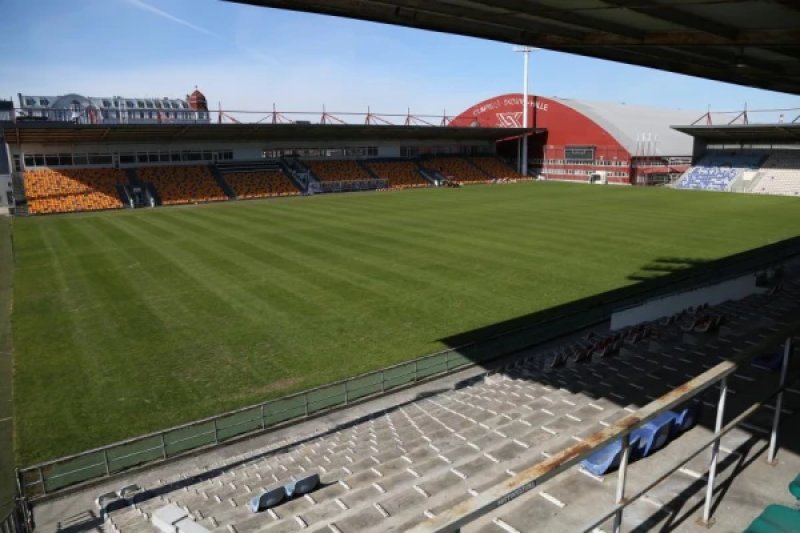
A final decision has not yet been made — the federation is awaiting the results of a financial and economic study. At the same time, the Latvian Football Federation (LFF) hopes to complete the project by 2030, said the federation's secretary general Arturs Gaidels in the program "900 seconds" ([TV3](https://tv3.lv/zinas/latvija/skonto-vai-lucavsala-lff-atklaj-kur-lidz-2030-gadam-cer-redzet-nakotnes-futbola-stadionu/)). According to him, the situation has changed in the two years since signing the agreement with the Riga City Council for the development of the Lucavsala area, and the "Skonto" stadium has become a real alternative. "Right now our favorite is the 'Skonto' stadium because there is already a stadium there. There is infrastructure, and people are already used to football being played there." Gaidels noted that Lucavsala has great potential for development; however, this option will require significant investments in infrastructure, transportation systems, and site preparation. One of the reasons for the change in priorities was the reduction in the price of the facility by its owners. "When we started actively talking about Lucavsala, the owners of the 'Skonto' stadium effectively halved their price. Thanks to this, the 'Skonto' stadium became one of the real options." The LFF would like to build a stadium with a capacity of at least 15,000 spectators — more than double the current 'Skonto' stadium, which is designed for approximately 6,500 seats. At the same time, according to Gaidels, this is not just about a football arena. "When we talk about a football stadium, I would like to talk about a multifunctional stadium because it is impossible to recoup it solely through football." It is expected that the new stadium will host not only matches of the national team and clubs but also concerts, cultural events, and other mass gatherings. The LFF plans to secure funding for the project jointly with UEFA, FIFA, the state, and local government. "It is very difficult for the football federation to implement a project of this scale on its own." Currently, the evaluation of various scenarios is ongoing, and a key stage will be the completion of the financial and economic study, which should determine the most feasible construction option. At the same time, the federation's goal remains unchanged. "Our strategy provides that the stadium should be built by 2030." In Gaidels' opinion, Latvia needs to develop modern sports infrastructure to keep up with neighboring countries. "We must not lag behind Lithuania and Estonia. If we want to be competitive, we finally need to implement this project."