

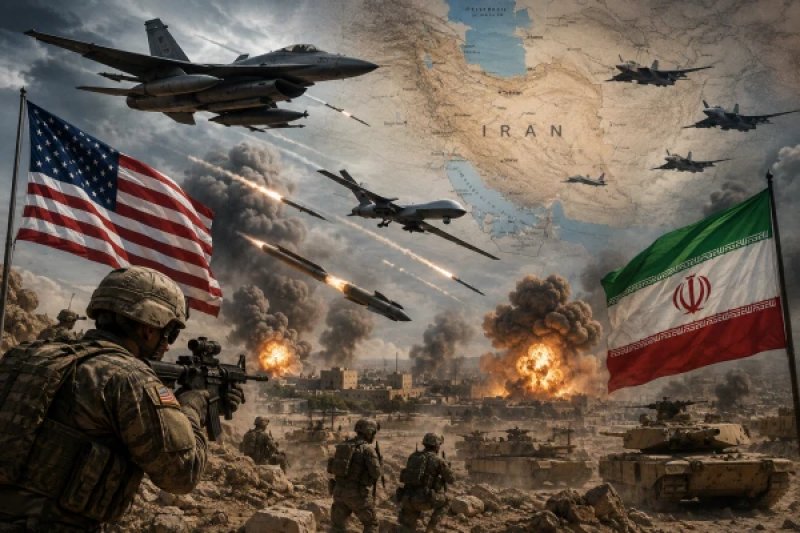
USA. Americans, tired of years of overseas military campaigns, are increasingly questioning why the country needs a new war. President Donald Trump, who promised to end "endless wars," has been conducting a military campaign against Iran for six months now. Amid the protracted conflict, dissatisfaction within the country is growing, including among Republican supporters, [reports](https://nos.nl/artikel/2625697-groot-deel-vs-klaar-met-iran-oorlog-zeggen-het-een-maar-doen-iets-anders) NOS. Such sentiments are particularly noticeable in the city of Middletown, Ohio, where U.S. Vice President J.D. Vance was born. "Everything keeps changing, there’s no clear objective," says Vietnam War veteran John Cox, who served as a sergeant first class. He recalls that in Vietnam, Americans were initially promised a short operation. "Back then, they also said we would go in quickly and come out quickly. In the end, the war lasted nineteen years," he reminds. Although the conflict with Iran has lasted only six months, criticism of the White House is increasingly heard among veterans of Post 218, an organization of former servicemen in Middletown.  _John Cox. Photo: NOS._ "Today Trump calls it a war, tomorrow just a skirmish. It shouldn’t be like that. If a country starts a military operation, it should understand what it wants to achieve: come in, accomplish the task, and leave," Cox believes. During the election campaign, Donald Trump assured that the operation against Iran would take only four to six weeks. However, deadlines have been repeatedly postponed. The president has stated dozens of times that the end of the war is near, but at the same time continued to increase pressure on Tehran. The day before, Trump again stated that the opening of the Strait of Hormuz and Iran's abandonment of its nuclear program is a matter of time. Almost immediately after that, he once again threatened Iran with "the largest bombings in history." Another veteran, Jeff Manning, who served as a sapper and worked on munitions, says he long stopped believing politicians' statements. "They say one thing and do something completely different. I don’t see a war here. I only see peaceful people dying because governments want to expand their influence," he says. This war has not been popular from the very beginning. However, after combat operations continued despite a declared ceasefire, public discontent has only intensified. According to the latest survey by the AP-NORC research center, 64% of Americans believe that this war is not worth the casualties and costs incurred. Among Republicans, the majority still supports the administration's actions, but the level of support is gradually decreasing. There are increasing reasons for concern. Americans are talking about dwindling weapon supplies, a rising number of American military casualties, and a lack of transparent information about the campaign's progress. But the main factor for many has become gasoline prices. It is the rise in fuel costs that is beginning to irritate even Trump's traditional electorate — the MAGA movement ("Make America Great Again"). This is especially sensitive ahead of the midterm elections in Congress, which will take place later this year. According to a Politico poll, only 37% of Americans are willing to accept the economic consequences of the war. Back in May, nearly half of respondents expressed such readiness. "Many disagree with what is happening in Iran right now," Manning says. "To be honest, I can hardly see any difference between Trump and Putin: both do what they think is necessary." Even before the expansion of the military operation, current Vice President J.D. Vance tried to convince the president to avoid escalation. "I think we are making a mistake," he said before strikes against the Yemeni Houthis — a group supported by Iran. Later, it became known that in a closed Signal chat, which a journalist accidentally entered, Vance warned colleagues: there is a real risk that Americans will not understand the reasons for the new war, and oil prices will rise sharply. However, his opinion did not influence the administration's decision at that time. Bombings did begin. Even in Vance's hometown, attitudes toward him are far from unanimous. Some residents refuse to talk to journalists altogether. One of the politician's neighbors said that Vance's mother asked people not to speak with the press. Another neighbor, Jerry Dobbins, recalls seeing the future vice president as a baby. "I remember when he was first brought to this house. Then we would greet each other, sometimes talk," he says.  _Jerry Dobbins, Photo: NOS._ When asked about Vance's previous opposition to the war with Iran, Dobbins responds after a brief pause. "Politically, I think we are still trying to do the right thing. If there is a country that should not be allowed to acquire nuclear weapons, it is Iran. I really don’t want it to come to that, but if it takes sending ground troops to complete the operation, perhaps there will be no other choice." In the veterans' club Post 218, former Marine Danny shares a similar opinion. "Of course, all this shouldn’t have happened, especially after Trump’s promises to end wars, not start new ones. But Iran is a very complex opponent. Now I just hope he sees this through to the end and then we can finally leave," the veteran says. Polls show that most Americans no longer consider the war with Iran justified. Against the backdrop of rising fuel prices, uncertain timelines for the operation's completion, and a lack of clear results, public support for the conflict continues to decline, which could pose a serious challenge for the Trump administration ahead of the midterm elections in Congress.
